There are now 12 days leading up to what could be the most important election in the history of the United States. To get us all pumped up for election day, this blog will feature one of the best protest songs ever recorded each day. Next up…..the Eve of Destruction. I welcome your thoughts about the upcoming election……
Protest Songs
There are now 13 days leading up to what could be the most important election in the history of the United States. To get us all pumped up for election day, this blog will feature one of the best protest songs ever recorded each day. Next up…..Fish. I welcome your thoughts about the upcoming election……

Twenty five years ago, Chinese authorities brutally suppressed the student-led Democracy Movement in Tiananmen Square. Troops backed by tanks massacred an unknown number of unarmed Chinese citizens that were attempting to block the advance of the military to Tiananmen Square. The photo above is a zoomed out view of a student blocking a column of advancing tanks armed with nothing but a briefcase. If you ever doubt that you can make a difference in the world pull this picture out to remind yourself just how much one person can accomplish.
Mary Chapin Carpenter wrote a great song about the Massacre, 4 June 1989. The story behind the song is summarized in the following extract from an August 26, 2010 article posted on the Washington Post website. Read the article and then listen to the song below.
It was [inspired by] an article in the New York Times during the 20th anniversary week of the Tiananmen Square massacre. It was a profile of an artist in China who was 17 at the time, and he was a soldier in the army. The first verse is his recollections of what it was like to be there — and to be sent in “imposter’s clothes,” when the authorities were trying to infiltrate the protesters. He was haunted by his part in it. He’s an artist now in China and he works all the time trying in a way to almost provoke the authorities. They have this game that they play where they allow him to put his work on the Internet for example, and it’ll stay up for a day or two, and then all of a sudden it’s taken down. The lyric about “vanishing into the ether” is my sense of it. His story was exceedingly moving to me and I just tried to write about it.

NEVER FORGET WHAT ONE PERSON CAN ACCOMPLISH

This is Memorial Day weekend in the US. A time when we remember and honor the men and women who have fought and died for our country. This is the second of three posts I have planned for this weekend, each of which will include a D-Day article written by war correspondent Ernie Pyle. Ernie was there and if you read his words you’ll find yourself transported there as well.
Ernie’s words give me chills and I try to read them every year to honor those that he was writing about. My uncle, Herman Rice, was one of the paratroopers that was dropped behind the German forces the day prior to D-Day to support the invasion and I can’t think of any better way to honor his memory.
As we remember those that have fought for our country I believe that it’s important to also spend some time thinking about the importance of working just as hard to avoid wars as we do to fight wars. I love my country but some of our leaders in the past have chosen to get us involved in wars that we had no business being involved in. Think Vietnam, Iraq, etc. etc. etc. Let’s use Memorial Day to commit ourselves to not making such mistakes in the future!
Here is the last of Ernie’s three D-Day articles, A Long Thin Line Of Personal Anguish,……
NORMANDY BEACHHEAD, June 17, 1944 – In the preceding column we told about the D-day wreckage among our machines of war that were expended in taking one of the Normandy beaches.
But there is another and more human litter. It extends in a thin little line, just like a high-water mark, for miles along the beach. This is the strewn personal gear, gear that will never be needed again, of those who fought and died to give us our entrance into Europe.
Here in a jumbled row for mile on mile are soldiers’ packs. Here are socks and shoe polish, sewing kits, diaries, Bibles and hand grenades. Here are the latest letters from home, with the address on each one neatly razored out – one of the security precautions enforced before the boys embarked.
Here are toothbrushes and razors, and snapshots of families back home staring up at you from the sand. Here are pocketbooks, metal mirrors, extra trousers, and bloody, abandoned shoes. Here are broken-handled shovels, and portable radios smashed almost beyond recognition, and mine detectors twisted and ruined.
Here are torn pistol belts and canvas water buckets, first-aid kits and jumbled heaps of lifebelts. I picked up a pocket Bible with a soldier’s name in it, and put it in my jacket. I carried it half a mile or so and then put it back down on the beach. I don’t know why I picked it up, or why I put it back down.
Soldiers carry strange things ashore with them. In every invasion you’ll find at least one soldier hitting the beach at H-hour with a banjo slung over his shoulder. The most ironic piece of equipment marking our beach – this beach of first despair, then victory – is a tennis racket that some soldier had brought along. It lies lonesomely on the sand, clamped in its rack, not a string broken.
Two of the most dominant items in the beach refuse are cigarets and writing paper. Each soldier was issued a carton of cigarets just before he started. Today these cartons by the thousand, water-soaked and spilled out, mark the line of our first savage blow.
Writing paper and air-mail envelopes come second. The boys had intended to do a lot of writing in France. Letters that would have filled those blank, abandoned pages.
Always there are dogs in every invasion. There is a dog still on the beach today, still pitifully looking for his masters.
He stays at the water’s edge, near a boat that lies twisted and half sunk at the water line. He barks appealingly to every soldier who approaches, trots eagerly along with him for a few feet, and then, sensing himself unwanted in all this haste, runs back to wait in vain for his own people at his own empty boat.
Over and around this long thin line of personal anguish, fresh men today are rushing vast supplies to keep our armies pushing on into France. Other squads of men pick amidst the wreckage to salvage ammunition and equipment that are still usable.
Men worked and slept on the beach for days before the last D-day victim was taken away for burial.
I stepped over the form of one youngster whom I thought dead. But when I looked down I saw he was only sleeping. He was very young, and very tired. He lay on one elbow, his hand suspended in the air about six inches from the ground. And in the palm of his hand he held a large, smooth rock.
I stood and looked at him a long time. He seemed in his sleep to hold that rock lovingly, as though it were his last link with a vanishing world. I have no idea at all why he went to sleep with the rock in his hand, or what kept him from dropping it once he was asleep. It was just one of those little things without explanation that a person remembers for a long time.
The strong, swirling tides of the Normandy coastline shift the contours of the sandy beach as they move in and out. They carry soldiers’ bodies out to sea, and later they return them. They cover the corpses of heroes with sand, and then in their whims they uncover them.
As I plowed out over the wet sand of the beach on that first day ashore, I walked around what seemed to be a couple of pieces of driftwood sticking out of the sand. But they weren’t driftwood.
They were a soldier’s two feet. He was completely covered by the shifting sands except for his feet. The toes of his GI shoes pointed toward the land he had come so far to see, and which he saw so briefly.
For the final song featured in my Memorial Day Weekend 2014 posts I’ve chosen Sheryl Crow’s “God Bless This Mess” which highlight’s how the Bush administration dragged the US into a war in Iraq that was based on lies………
Daddy’s in the hallway
Hanging pictures on the wall
And mama’s in the kitchen
Making casseroles for allMy brother came home yesterday
From somewhere far away
He doesn’t look like I remember
As he stares off into space
He must’ve seen some ugly things out there
He just can’t seem to sayOh, God bless this mess
God bless this mess
God bless this messI got a job in town
Selling insurance on the phone
With Robert and Teresa
And two con men from back homeBut everyone I call up doesn’t have the time to chat
Everybody is so busy doing this and doing that
But something has gone missing
And it makes me kinda sadOh, God bless this mess
God bless this mess
God bless this messI heard about the day
That two skyscrapers came down
Firemen, policemen
People came from all aroundThe smoke covered the city
And the body count arised
And the president spoke words of comfort
With teardrops in his eyes
Then he led us as a nation
Into a war based on liesOh, God bless this mess
God bless this mess
God bless this mess
God bless this mess

This is Memorial Day weekend in the US. A time when we remember and honor the men and women who have fought and died for our country. This is the second of three posts I have planned for this weekend, each of which will include a D-Day article written by war correspondent Ernie Pyle. Ernie was there and if you read his words you’ll find yourself transported there as well.
Ernie’s words give me chills and I try to read them every year to honor those that he was writing about. My uncle, Herman Rice, was one of the paratroopers that was dropped behind the German forces the day prior to D-Day to support the invasion and I can’t think of any better way to honor his memory.
As we remember those that have fought for our country I believe that it’s important to also spend some time thinking about the importance of working just as hard to avoid wars as we do to fight wars. I love my country but some of our leaders in the past have chosen to get us involved in wars that we had no business being involved in. Think Vietnam, Iraq, etc. etc. etc. Let’s use Memorial Day to commit ourselves to not making such mistakes in the future!
Here is the second of Ernie’s three articles about D-Day, The Horrible Waste Of War,……
NORMANDY BEACHHEAD, June 16, 1944 – I took a walk along the historic coast of Normandy in the country of France.
It was a lovely day for strolling along the seashore. Men were sleeping on the sand, some of them sleeping forever. Men were floating in the water, but they didn’t know they were in the water, for they were dead.
The water was full of squishy little jellyfish about the size of your hand. Millions of them. In the center each of them had a green design exactly like a four-leaf clover. The good-luck emblem. Sure. Hell yes.
I walked for a mile and a half along the water’s edge of our many-miled invasion beach. You wanted to walk slowly, for the detail on that beach was infinite.
The wreckage was vast and startling. The awful waste and destruction of war, even aside from the loss of human life, has always been one of its outstanding features to those who are in it. Anything and everything is expendable. And we did expend on our beachhead in Normandy during those first few hours.
For a mile out from the beach there were scores of tanks and trucks and boats that you could no longer see, for they were at the bottom of the water – swamped by overloading, or hit by shells, or sunk by mines. Most of their crews were lost.
You could see trucks tipped half over and swamped. You could see partly sunken barges, and the angled-up corners of jeeps, and small landing craft half submerged. And at low tide you could still see those vicious six-pronged iron snares that helped snag and wreck them.
On the beach itself, high and dry, were all kinds of wrecked vehicles. There were tanks that had only just made the beach before being knocked out. There were jeeps that had been burned to a dull gray. There were big derricks on caterpillar treads that didn’t quite make it. There were half-tracks carrying office equipment that had been made into a shambles by a single shell hit, their interiors still holding their useless equipage of smashed typewriters, telephones, office files.
There were LCT’s turned completely upside down, and lying on their backs, and how they got that way I don’t know. There were boats stacked on top of each other, their sides caved in, their suspension doors knocked off.
In this shoreline museum of carnage there were abandoned rolls of barbed wire and smashed bulldozers and big stacks of thrown-away lifebelts and piles of shells still waiting to be moved.
In the water floated empty life rafts and soldiers’ packs and ration boxes, and mysterious oranges.
On the beach lay snarled rolls of telephone wire and big rolls of steel matting and stacks of broken, rusting rifles.
On the beach lay, expended, sufficient men and mechanism for a small war. They were gone forever now. And yet we could afford it.
We could afford it because we were on, we had our toehold, and behind us there were such enormous replacements for this wreckage on the beach that you could hardly conceive of their sum total. Men and equipment were flowing from England in such a gigantic stream that it made the waste on the beachhead seem like nothing at all, really nothing at all.
A few hundred yards back on the beach is a high bluff. Up there we had a tent hospital, and a barbed-wire enclosure for prisoners of war. From up there you could see far up and down the beach, in a spectacular crow’s-nest view, and far out to sea.
And standing out there on the water beyond all this wreckage was the greatest armada man has ever seen. You simply could not believe the gigantic collection of ships that lay out there waiting to unload.
Looking from the bluff, it lay thick and clear to the far horizon of the sea and beyond, and it spread out to the sides and was miles wide. Its utter enormity would move the hardest man.
As I stood up there I noticed a group of freshly taken German prisoners standing nearby. They had not yet been put in the prison cage. They were just standing there, a couple of doughboys leisurely guarding them with tommy guns.
The prisoners too were looking out to sea – the same bit of sea that for months and years had been so safely empty before their gaze. Now they stood staring almost as if in a trance.
They didn’t say a word to each other. They didn’t need to. The expression on their faces was something forever unforgettable. In it was the final horrified acceptance of their doom.
If only all Germans could have had the rich experience of standing on the bluff and looking out across the water and seeing what their compatriots saw.
Since this is a music blog I feel compelled to include music in most of my posts. As you contemplate my call to avoid wars in the future, listen to this great Joan Baez performance of a Bob Dylan song that highlights the ignorance of the commonly held view in the US that “God is on our side”……..
Oh my name it is nothin’
My age it means less
The country I come from
Is called the Midwest
I’s taught and brought up there
The laws to abide
And that the land that I live in
Has God on its sideOh the history books tell it
They tell it so well
The cavalries charged
The Indians fell
The cavalries charged
The Indians died
Oh the country was young
With God on its sideOh the Spanish-American
War had its day
And the Civil War too
Was soon laid away
And the names of the heroes
l’s made to memorize
With guns in their hands
And God on their sideOh the First World War, boys
It closed out its fate
The reason for fighting
I never got straight
But I learned to accept it
Accept it with pride
For you don’t count the dead
When God’s on your sideWhen the Second World War
Came to an end
We forgave the Germans
And we were friends
Though they murdered six million
In the ovens they fried
The Germans now too
Have God on their sideI’ve learned to hate Russians
All through my whole life
If another war starts
It’s them we must fight
To hate them and fear them
To run and to hide
And accept it all bravely
With God on my sideBut now we got weapons
Of the chemical dust
If fire them we’re forced to
Then fire them we must
One push of the button
And a shot the world wide
And you never ask questions
When God’s on your sideThrough many dark hour
I’ve been thinkin’ about this
That Jesus Christ
Was betrayed by a kiss
But I can’t think for you
You’ll have to decide
Whether Judas Iscariot
Had God on his sideSo now as I’m leavin’
I’m weary as Hell
The confusion I’m feelin’
Ain’t no tongue can tell
The words fill my head
And fall to the floor
If God’s on our side
He’ll stop the next war

This is Memorial Day weekend in the US. A time when we remember and honor the men and women who have fought and died for our country. I have three posts planned for this weekend each of which will include one of the D-Day articles written by war correspondent Ernie Pyle. Ernie was there and if you read his words you find yourself there as well.
Ernie’s words give me chills and I try to read them every year to honor those that he was writing about. My uncle, Herman Rice, was one of the paratroopers that was dropped behind the German forces the day prior to D-Day to support the invasion and I can’t think of any better way to honor his memory.
As we remember those that have fought for our country I believe that it’s important to also spend some time thinking about the importance of working just as hard to avoid wars as we do to fight wars. I love my country but some of our leaders in the past have chosen to get us involved in wars that we had no business being involved in. Think Vietnam, Iraq, etc. etc. etc. Let’s use Memorial Day to commit ourselves to not making such mistakes in the future!
Here is the first of Ernie’s three article, A Pure Miracle,………
NORMANDY BEACHHEAD, June 12, 1944 – Due to a last-minute alteration in the arrangements, I didn’t arrive on the beachhead until the morning after D-day, after our first wave of assault troops had hit the shore.
By the time we got here the beaches had been taken and the fighting had moved a couple of miles inland. All that remained on the beach was some sniping and artillery fire, and the occasional startling blast of a mine geysering brown sand into the air. That plus a gigantic and pitiful litter of wreckage along miles of shoreline.
Submerged tanks and overturned boats and burned trucks and shell-shattered jeeps and sad little personal belongings were strewn all over these bitter sands. That plus the bodies of soldiers lying in rows covered with blankets, the toes of their shoes sticking up in a line as though on drill. And other bodies, uncollected, still sprawling grotesquely in the sand or half hidden by the high grass beyond the beach.
That plus an intense, grim determination of work-weary men to get this chaotic beach organized and get all the vital supplies and the reinforcements moving more rapidly over it from the stacked-up ships standing in droves out to sea.
Now that it is over it seems to me a pure miracle that we ever took the beach at all. For some of our units it was easy, but in this special sector where I am now our troops faced such odds that our getting ashore was like my whipping Joe Louis down to a pulp.
In this column I want to tell you what the opening of the second front in this one sector entailed, so that you can know and appreciate and forever be humbly grateful to those both dead and alive who did it for you.
Ashore, facing us, were more enemy troops than we had in our assault waves. The advantages were all theirs, the disadvantages all ours. The Germans were dug into positions that they had been working on for months, although these were not yet all complete. A one-hundred-foot bluff a couple of hundred yards back from the beach had great concrete gun emplacements built right into the hilltop. These opened to the sides instead of to the front, thus making it very hard for naval fire from the sea to reach them. They could shoot parallel with the beach and cover every foot of it for miles with artillery fire.
Then they had hidden machine-gun nests on the forward slopes, with crossfire taking in every inch of the beach. These nests were connected by networks of trenches, so that the German gunners could move about without exposing themselves.
Throughout the length of the beach, running zigzag a couple of hundred yards back from the shoreline, was an immense V-shaped ditch fifteen feet deep. Nothing could cross it, not even men on foot, until fills had been made. And in other places at the far end of the beach, where the ground is flatter, they had great concrete walls. These were blasted by our naval gunfire or by explosives set by hand after we got ashore.
Our only exits from the beach were several swales or valleys, each about one hundred yards wide. The Germans made the most of these funnel-like traps, sowing them with buried mines. They contained, also, barbed-wire entanglements with mines attached, hidden ditches, and machine guns firing from the slopes.
This is what was on the shore. But our men had to go through a maze nearly as deadly as this before they even got ashore. Underwater obstacles were terrific. The Germans had whole fields of evil devices under the water to catch our boats. Even now, several days after the landing, we have cleared only channels through them and cannot yet approach the whole length of the beach with our ships. Even now some ship or boat hits one of these mines every day and is knocked out of commission.
The Germans had masses of those great six-pronged spiders, made of railroad iron and standing shoulder-high, just beneath the surface of the water for our landing craft to run into. They also had huge logs buried in the sand, pointing upward and outward, their tops just below the water. Attached to these logs were mines.
In addition to these obstacles they had floating mines offshore, land mines buried in the sand of the beach, and more mines in checkerboard rows in the tall grass beyond the sand. And the enemy had four men on shore for every three men we had approaching the shore.
And yet we got on.
Beach landings are planned to a schedule that is set far ahead of time. They all have to be timed, in order for everything to mesh and for the following waves of troops to be standing off the beach and ready to land at the right moment.
As the landings are planned, some elements of the assault force are to break through quickly, push on inland, and attack the most obvious enemy strong points. It is usually the plan for units to be inland, attacking gun positions from behind, within a matter of minutes after the first men hit the beach.
I have always been amazed at the speed called for in these plans. You’ll have schedules calling for engineers to land at H-hour plus two minutes, and service troops at H-hour plus thirty minutes, and even for press censors to land at H-hour plus seventy-five minutes. But in the attack on this special portion of the beach where I am – the worst we had, incidentally – the schedule didn’t hold.
Our men simply could not get past the beach. They were pinned down right on the water’s edge by an inhuman wall of fire from the bluff. Our first waves were on that beach for hours, instead of a few minutes, before they could begin working inland.
You can still see the foxholes they dug at the very edge of the water, in the sand and the small, jumbled rocks that form parts of the beach.
Medical corpsmen attended the wounded as best they could. Men were killed as they stepped out of landing craft. An officer whom I knew got a bullet through the head just as the door of his landing craft was let down. Some men were drowned.
The first crack in the beach defenses was finally accomplished by terrific and wonderful naval gunfire, which knocked out the big emplacements. They tell epic stories of destroyers that ran right up into shallow water and had it out point-blank with the big guns in those concrete emplacements ashore.
When the heavy fire stopped, our men were organized by their officers and pushed on inland, circling machine-gun nests and taking them from the rear.
As one officer said, the only way to take a beach is to face it and keep going. It is costly at first, but it’s the only way. If the men are pinned down on the beach, dug in and out of action, they might as well not be there at all. They hold up the waves behind them, and nothing is being gained.
Our men were pinned down for a while, but finally they stood up and went through, and so we took that beach and accomplished our landing. We did it with every advantage on the enemy’s side and every disadvantage on ours. In the light of a couple of days of retrospection, we sit and talk and call it a miracle that our men ever got on at all or were able to stay on.
Before long it will be permitted to name the units that did it. Then you will know to whom this glory should go. They suffered casualties. And yet if you take the entire beachhead assault, including other units that had a much easier time, our total casualties in driving this wedge into the continent of Europe were remarkably low – only a fraction, in fact, of what our commanders had been prepared to accept.
And these units that were so battered and went through such hell are still, right at this moment, pushing on inland without rest, their spirits high, their egotism in victory almost reaching the smart-alecky stage.
Their tails are up. “We’ve done it again,” they say. They figure that the rest of the army isn’t needed at all. Which proves that, while their judgment in this regard is bad, they certainly have the spirit that wins battles and eventually wars.
Since this is a music blog I feel compelled to include music in most of my posts. As you contemplate my call to avoid wars in the future listen to this Emerson, Lake, and Palmer song that musically makes that same point
Clear the battlefield and let me see
All the profit from our victory.
You talk of freedom, starving children fall.
Are you deaf when you hear the season’s call?Were you there to watch the earth be scorched?
Did you stand beside the spectral torch?
Know the leaves of sorrow turned their face,
Scattered on the ashes of disgrace.

“If there’s something wrong, speak up.” – Pete Seeger
I won’t bore you with a tribute to Pete today….if you want to read one, they are easy to find.
Instead, I ask each of you to think about which side you are on. Pete was always on the right side whether it was supporting the labor movement in the 40s, fighting McCarthyism in the 50, or marching for civil rights and protesting the Vietnam war in the 60s. We have issues today that are just as important as the ones that Pete sang about but very few people today seem to be willing to take a stand. If you want to honor the life of Pete Seeger pick a side, speak up, and make your life count.
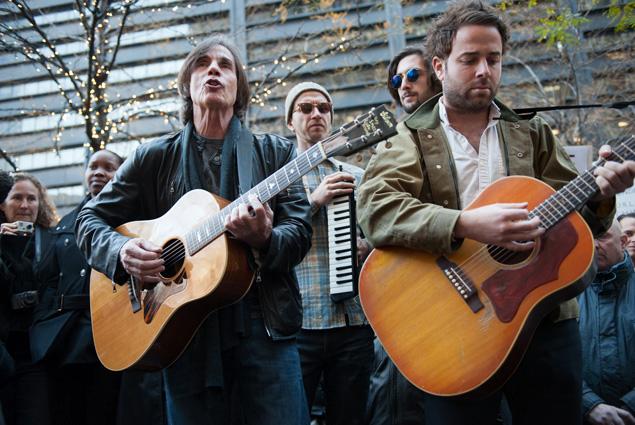
Today’s Sunday Session features one of my all time favorite performers, Jackson Browne, performing with the group that released my favorite record this year, Dawes, during the Occupy Wall Street protests. Enjoy….

This weekend I was thinking about a movie that fell in love with back in 1973 but haven’t seen again since then. The movie, O Lucky Man, was written and directed by Lindsay Anderson. It was a brilliant allegory on life in a capitalist society and a very young Malcolm McDowell was terrific in the lead role of Mick Travis. The movie was not very successful, it opened and closed in the save week in the town in Alabama where I was attending college, but I was lucky enough to see it.
One of the most interesting parts of the movie was the use of Alan Price (the original keyboard player for the Animals) and his band as kind of a Greek chorus. They appeared at various time throughout the movie and their songs provided a running commentary. The songs were quite brilliant in their own right, providing a commentary on the real facts of life that I was just beginning to learn about as a young man of twenty in the United States. I bought the soundtrack album and still treasure that vinyl copy.
So……for today’s Two’fer Tuesday Post I want to share two of my favorite songs from the movie. Their lyrics are as meaningful to me as they were back in 1973. As always, let me know what you think.
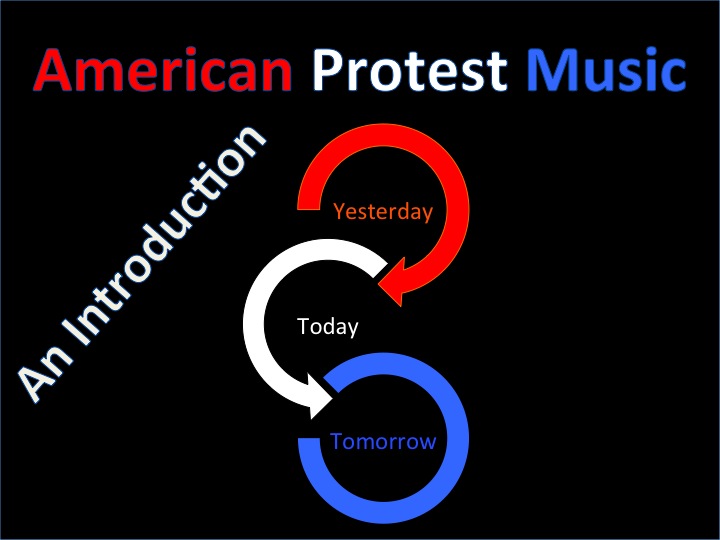
Protest Music has always been part of American music and it still is today. It is not something that you hear about on a daily basis but it is always there lurking in the background.
In some ways, it is somewhat like the “room of requirement” from Harry Potter in that was always there when it was really needed. Think about the song Ohio from Crosby, Stills, Nash, and Young. Neil Young wrote the song immediately after David Crosby showed him Life Magazine photos of the National Guard gunning down students at Kent State during an antiwar protest. The band recorded the song that night and it was released in a a matter of a couple of weeks. There was a need and the perfect song was there. Let’s listen…..
I can still remember hearing the song on the radio the first time. Of course I had already heard of what happened at Kent State. I couldn’t believe that our government had shot down innocent college student but I felt powerless and alone. Ohio captured every emotion I felt but was unable to convey and, most importantly, after hearing the song I knew I was not alone in having those feelings….I was part of a group. It was perfect.
In other cases protest music is already written and is just waiting for the right moment. In this way it is like a lot of modern technological innovations that get invented before there is an application for them. Let me give you an example from a recent article that i read in Wired Magazine.
Don Stookey knew he had botched the experiment. One day in 1952, the Corning Glass Works chemist placed a sample of photosensitive glass inside a furnace and set the temperature to 600 degrees Celsius. At some point during the run, a faulty controller let the temperature climb to 900 degrees C. Expecting a melted blob of glass and a ruined furnace, Stookey opened the door to discover that, weirdly, his lithium silicate had transformed into a milky white plate. When he tried to remove it, the sample slipped from the tongs and crashed to the floor. Instead of shattering, it bounced.
The future National Inventors Hall of Fame inductee didn’t know it, but he had just invented the first synthetic glass-ceramic, a material Corning would later dub Pyroceram. Lighter than aluminum, harder than high-carbon steel, and many times stronger than regular soda-lime glass, Pyroceram eventually found its way into everything from missile nose cones to chemistry labs. It could also be used in microwave ovens, and in 1959 Pyroceram debuted as a line of space-age serving dishes: Corningware.
The material was a boon to Corning’s fortunes, and soon the company launched Project Muscle, a massive R&D effort to explore other ways of strengthening glass. A breakthrough came when company scientists tweaked a recently developed method of reinforcing glass that involved dousing it in a bath of hot potassium salt. They discovered that adding aluminum oxide to a given glass composition before the dip would result in remarkable strength and durability. Scientists were soon hurling fortified tumblers off their nine-story facility and bombarding the glass, known internally as 0317, with frozen chickens. It could be bent and twisted to an extraordinary degree before fracturing, and it could withstand 100,000 pounds of pressure per square inch. (Normal glass can weather about 7,000.) In 1962 Corning began marketing the glass as Chemcor and thought it could work for products like phone booths, prison windows, and eyeglasses.
Yet while there was plenty of initial interest, sales were slow. Some companies did place small orders for products like safety eyeglasses. But these were recalled for fear of the potentially explosive way the glass could break. Chemcor seemed like it would make a good car windshield too, and while it did show up in a handful of Javelins, made by American Motors, most manufacturers weren’t convinced that paying more for the new muscle glass was worth it—especially when the laminated stuff they’d been using since the ’30s seemed to work fine.
Corning had invented an expensive upgrade nobody wanted. It didn’t help that crash tests found tat “head deceleration was significantly higher” on the windshields—the Chemcor might remain intact, but human skulls would not.
After pitches to Ford Motors and other automakers failed, Project Muscle was shut down and Chemcor was shelved in 1971. It was a solution that would have to wait for the right problem to arise.
The right problem for Chemcor ended up being one posed by Steve Job from Apple Computers in 2007. He needed Corning to produce millions of square feet of ultrathin, ultrastrong glass that didn’t yet exist for a new device that Apple was working on called the iPhone. The work that corning had done on Chemcor allowed them to produce what is now know as Gorilla Glass, a product that is now featured on more than 750 products and 33 brands worldwide. Chemcor had finally found its problem.
(Read the full Wired Magazine article at: http://www.wired.com/wiredscience/2012/09/ff-corning-gorilla-glass/all/)
Some protest music is like Chemcor. As an example, Charles Albert Tindley wrote a song called “I’ll Overcome Someday” in the early 1900s. Here is a 1930 performance of the song by Caldwell Bracy at the King Edward Hotel in Jackson, Mississippi.
The song was brought to the Highlander Folk School (a school that trained union organizers, in the 1930s by tobacco workers from Charleston, South Carolina. Songwriters including Pete Seeger and Guy Carawan, heard it at the school and altered Tindley’s refrain “I’ll Overcome Someday” to “We Shall Overcome” and the resulting song became the theme song of the US Civil Rights Movement in the 1960s. I’ll Overcome Someday had found it’s problem. (Thanks to Wikipedia for providing source material about We Shall Overcome) Here is Bruce Springsteen’s version of We Shall Overcome that he recorded as part of his tribute to Pete Seeger. Let’s listen…..
The next installment of the American Protest Music series will start to investigate the some of our earliest examples of Protest Music. Stay tuned…….
As always, let me know what you think!