l finally finished the California Sound (4) – Triumvirate post. Please go back and check it out. When you do, you will understand the significance of this song to the beginnings of Crosby, Stills, and Nash.
I will be back with another post soon.
l finally finished the California Sound (4) – Triumvirate post. Please go back and check it out. When you do, you will understand the significance of this song to the beginnings of Crosby, Stills, and Nash.
I will be back with another post soon.
I made an update to the currently in-progress California Sound (4) – Triumvirate post. Please check it out.
I will do my best to finish it off by this weekend, the best is yet to come. Here is a preview of things to come as a reward for your patience.
Not bad for their first public performance!
So, before we move on, there are some loose ends that need to be tied up.
When we last discussed Buffalo Springfield, things appeared to be looking up. The band, with Jim Messina now on board as bassist, recorded some new tracks in early 1968; however, things fell apart for good when Neil, Richie, and Jim were caught up in a drug bust in April of 1968. Although the group formally disbanded in May of 1968, it still had a contractual obligation for one more album. Jim and Richie took the tracks from earlier in the year (and some culled from recording sessions in 1967) and used them to create the final Buffalo Springfield record that was appropriately titled Last Time Around. Here is one of Stephen’s songs that made it onto that last album.
The Byrds were in a creative growth spurt at the end of our first post in this series. David, Chris, and Jim (who was by now going by Roger) were all proving to be accomplished song writers and we highlighted some of their key contributions to the Younger Than Yesterday album. Work on their next album, The Notorious Byrd Brothers, started in 1967. The first song they recorded was one of David’s titled Lady Friend. It was a wonderful song, perhaps his best to date, and David took the lead during the recording session. See what you think.
Lady Friend was David’s only A side single for the Byrds but, inexplicably, it was not a hit. David took its lack of success hard. Although I love David and his music, based on everything I know about him, he is not an easy person to live with. The failure of Lady Friend probably exacerbated this issue. In David’ own words (from a ByrdWatcher interview in 1998), “I was not an easy guy at that point. I was pretty much of a punk and had an enormous attitude and thought I was a lot better than I probably was, and wanted to be… to have a larger share of things.” David’s attitude started to grate on Roger and Chris and as the recording sessions for The Notorious Byrd Brothers continued the tensions in the group continued to increase. The end result was that David was kicked out of the band (and/or left the band) before the album was released. In addition to David’s attitude, other contributing factors to his departure included the refusal of Roger and Chris to include David’s song Triad on the album and their decisions to include a cover of Goin Back on the album when David felt that he had songs that were better. The end result was (again in David’s own words from the interview referenced above), Notorious Byrd Brothers…”is the record they tried to pretend I wasn’t on. [Laughs.] I’m on it. It was not a comfortable parting of the ways. They threw me out. And they were not nice about it. And they did take songs that I co-wrote, and music that I made, and tried to pretend that I wasn’t there. Or at least give the impression that I wasn’t there, which was unkind, but understandable under the circumstances.” Maybe most troubling to David was the band’s failure to include Lady Friend on the album. On this topic David has said (from the interview referenced above) “That frustrated me more. That was when I realized that I was really up against them, because I thought, “Man, this is good as anything else there — at least.” And it should have been used.”
Bottom line….David was out of the band. Around the same time, Michael Clarke left the Byrds as well leaving the group with only two of its original members (Roger and Chris). We will continue the Byrds saga in a later post.
So…..when we last discussed the Hollies all was looking up. Allan Clarke, Tony Hicks, and Graham Nash had taken over songwriting duties on the Hollies last two albums in 1966 and 1967 and the band was creating some wonderful music. Graham Nash, in particular, was stretching his songwriting wings. He wrote the Hollies’s next single King Midas in Reverse (credited to Clarke, Nash, and Hicks) but had to fight with the producer to get it released. The producer thought the song was too complex, let’s listen and you can decide for your self whether you agree with the producer
As it turns out, the song was not as commercially successful as earlier Hollies songs. (If you have been following closely you might start to notice some interesting similarities starting to develop between the career’s of David Crosby and Graham Nash) The Hollies next album, Butterfly, was released in 1968. This album, like the previous two, was completely written by the Hollies. Although Alan, Tony, and Graham all contributed to the album, Graham clearly was playing the lead role for the group on this album in terms of songwriting and lead vocals. All of this makes the Hollies next career decision almost impossible to understand….they decided that their next album would be entirely composed of Bob Dylan covers. To be clear, by “they” I mean the whole band excluding Graham. Putting out an album of cover songs was a course of action was totally unacceptable to Graham (yet another similarity between David and Graham). He decided to leave the band in late 1968 . The Hollies would continue as a successful band but the they had peaked from an artistic perspective. This was not to be the case for Graham.
In my very first post in this Blog we talked about how Stephen and David got together after the breakup of Buffalo Springfield and David’s departure from the Byrds so I will not repeat that story here. If you missed that post, why don’t you take a minute and read it before proceeding.
At some point during 1968, David and Stephen were hanging out at Cass Elliot’s house and harmonizing on You Don’t Have To Cry, a new song by Stephen. Graham Nash, taking a break from the Hollies, was also present at Cass’s house that day and asked Stephen and David to sing the song one more time. Graham joined in, added an improvised harmony part, and musical history was changed forever. The guys knew that they were on to something special but at this point Graham was still in the Hollies so it would take a few months for this new relationship to be fully consummated. When Graham finally left the Hollies later in 1968, Crosby, Stills, and Nash was officially a group but there was one remaining hitch. Ahmet Ertegun, was ready to sign the group to a recording contract with Atlantic Records but Graham was signed to Epic which was the Hollies label. This problem was finally solved in a deal that basically traded Richie Furay, and his new post-Buffalo Springfield group named Poco, to Epic records in return for Epic releasing Graham. We will talk more about Richie’s new group in our next post in the Southern California Sound series.

The group’s self titled album was released in 1969. Although all three members contributed incredible songs to the album, it was Stephen that played most of the instruments during the recording of the album. This ended up being a critical issue once the band decided to tour and we will talk more about this in a future post. For now, let’s just enjoy a song from each of the members.
David
Graham
Stephen
I think the Rolling Stone reviewer of the album nailed it (for once) in July of 1969 when he said, “They are in complete control of all they do, and the result is an especially satisfying work.” I hope you agree with the reviewer. Look for the next post in this series by late next week.

OK, where were we?
Oh yes, we were talking about clusters of genius as identified in David Banks paper titled, The Problem Of Excess Genius. I postulated that there had been such a cluster of musical genius in LA during the mid-1960s. We then reviewed the stories of the Byrds and Buffalo Springfield and hopefully provided sufficient detail to at least get you to consider that these two groups might represent what I characterized as the foundational groups for the California Sound.
Before we continue to build our case and show the groups that evolved from these two foundational groups, we need to lay a little more groundwork and introduce one more musician that played a role in our story.
Jonah Leher, writing in the March 2012 edition of Wired magazine, also discusses David Banks paper and adds in some additional interesting patterns associated with clusters of genius. One of these patterns is the development of institutions that that encourage risk taking. In the case of the musical cluster of genius in mid-1960 LA, these institutions were the record labels. Atlantic Records signed Buffalo Springfield within three months of the forming of the band, had them in studio almost immediately, and allowed them to record their own songs. If this isn’t risk taking, I don’t know what is!
Another pattern is that most clusters of genius form in places that attract a wide diversity of people and that encouraged people to share ideas. LA in the mid-1960s was clearly such a place. Clubs like the Troubadour and the Whiskey a Go Go provided “forums” for these musicians to congregate and share ideas. Young people were being drawn to the LA music scene to participate in it or just to experience it. Buffalo Springfield illustrates this point. Neil Young and Bruce Palmer were from Canada, Stephen Stills was from Louisiana, and Richie Furray was from Ohio. This influx of musicians was not limited to locations from North America; however, and this brings us to the real focus of today’s post.
In the early 1960’s there was another little (OK…huge) cluster of musical genius in Great Britain (maybe we will write about it in a later series of posts). If you were in the US, you probably referred to this as the British Invasion. Groups like the Beatles and Rolling Stone were part of this Invasion as were another very accomplished but slightly less popular group called the Hollies.
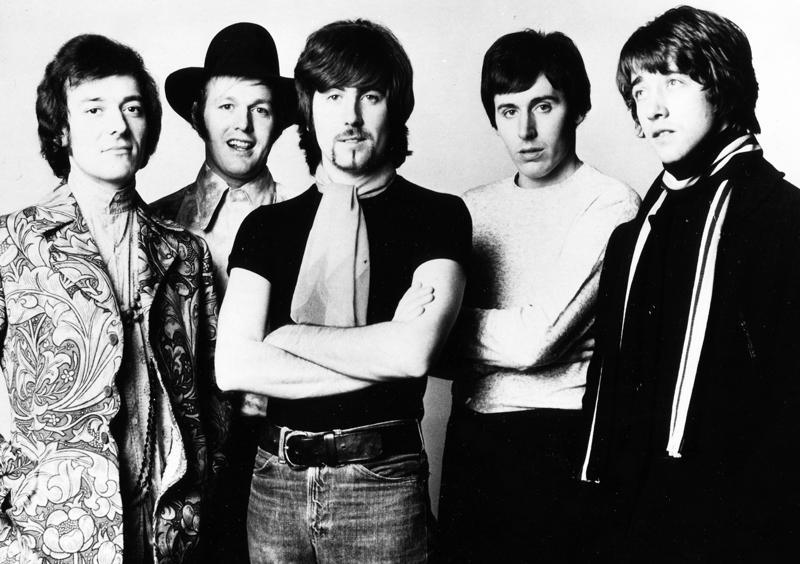
I don’t want to go through an in-depth history of the Hollies but lets hit some high points. The group was similar to the Byrds from several perspectives. First, vocal harmonies were a corner of the Hollies sound. Second, the initial successes of the Hollies were based on cover songs while eventually key members of the group (Allan Clarke, Tony Hicks, and Graham Nash) started to step forward and assume songwriting duties. By the Hollies’ fifth album in 1966 (For Certain Because(UK)/Stop!Stop!Stop!(US) and sixth album in 1967 (Evolution), all of the songs were written by members of the group. All was looking up for the Hollies in 1966 and 1967.
Let’s listen to the hit single released in the US for the Evolution album.
I hope you agree that the vocal harmonies on Carrie Anne, especially the high ones from Graham Nash, are brilliant. We will hear more about Graham, and how he became part of the Southern California Sound, in future posts in this on-going series. I should have the next series post up around mid-week.
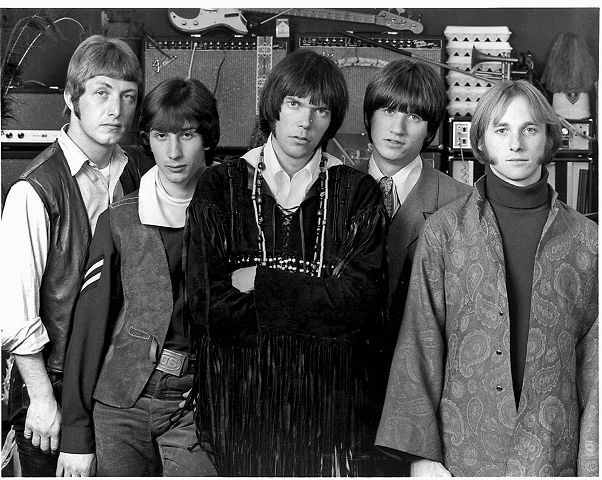
The group that became Buffalo Springfield formed in Los Angeles in 1966; however, the real origin of the group can be traced back to 1965 in Canada. Stephen Stills and Neil Young first met at a club in Ontario. They established an immediate bond and the way that this bond was finally cemented is one the most legendary stories of rock music.
Stephen moved to LA to do session work after meeting Neil. He eventually invited Richie Furay, a former bandmate, to join him with the hope of forming a new group. Neil Young and Bruce Palmer (a Canadian bass player) also headed to LA in early 1966 when the group that they were in disbanded due to the legal issues of their singer (this in itself is an interesting story, you might want to research it on Internet). Neil’s goal in coming to LA was to find Stephen and form a new group. In 1966 this was a daunting, if not impossible, task since Neil and Bruce did not have any way of finding Stephen other than driving around (for those of you who don’t remember life before cell phones, this is probably hard to understand). Unfortunately, LA is big place so the odds were against them. The day before Neil and Bruce were scheduled to head back north they were driving down Sunset and drove past Stephen and Richie who were headed in the opposite direction. Stephen immediately recognized the car they were driving (did I mention that Neil had a black Pontiac Hearse?) and he and Richie turned around and chased Neil and Bruce down. The four of them would form the nucleus of a new and yet to be named group. With the addition of drummer Dewey Martin, the group was complete and all they needed was a name. Fate once again intervened. One morning Stephen and Richie found a Buffalo Springfield brand steamroller parked in front of their house and they had their name.

Whereas the Byrds took a while until they were ready to fly on their own (i.e. write most of the music on their albums), Buffalo Springfield sprang to life fully formed and ready roll over anything that got in their way like…well like a real Buffalo Springfield. Unfortunately, the musical Buffalo Springfield was anything but reliable and broke down after two years but I am getting ahead of myself.
By the end of 1966 the Buffalo Springfield released their first album titled Buffalo Springfield. Stephen and Neil wrote all of the songs on the album (Stephen contributed 7 and Neil contributed 5). Two versions of the album were released. The original release included a Stills song titled Baby Don’t Scold Me. A subsequent release dropped Baby Don’t Scold Me in favor of another Stills song titled For What It’s Worth when it became a surprise top ten hit. The tragedy of this album, in my opinion, is that Neil was not allowed to sing most of his own compositions because the producers for the album did not like his voice. Here is one of Neil’s contributions; Flying On The Ground is Wrong, as sung by Richie Furay on the album.
By early 1967 the band was already starting to come apart at the seams. Bruce Palmer was arrested on a drug possession charge and deported to Canada. A rotating cast of substitute bassists replaced Bruce until his return later in the year. In some cases, the substitutes were not even really bassist. Check out the video of Buffalo Springfield’s appearance on the Hollywood Palace TV show below and notice that the bassist is shown with his back to the camera the whole time. That is because he was the road manager for Buffalo Springfield and did not know how to play the bass (ahh….the beauty of lip syncing to a prerecorded track).
In addition to the problems with Bruce, Stephen and Neil had started their infamous series of spats. They were both accomplished musicians, accomplished songwriters, and had their own ideas about the band so this conflict was probably inevitable. The end result was that Neil left the band (for the first time) during a portion of 1967. (Note: the spats between Stephen and Neil have continued throughout the years…checkout an earlier post titled Long May You Run Away for another of their famous spats). Neil ended up missing the Buffalo Springfield appearance at the 1967 Monterey Pop Festival and was replaced by David Crosby of the Byrds. We touched on this event in an earlier post titled Falling Apart To Come Together.
Even with this turmoil, the band managed to complete its second album, Buffalo Springfield Again, in 1967. This album is viewed as the high water mark for Buffalo Springfield although, not surprisingly given the circumstances, it really didn’t reflect a true group effort. Maybe the best song on the album, and certainly one of my favorites, was Stephen’s song Bluebird. Let’s give it a listen.
Another notable aspect of the album was Richie Furay’s contribution of three songs. Sad Memory, was one of Richie’s contributions to the album…see what you think.
This song and Richie’s other contributions were not at a level such that they competed head to head with Stephen and Neil but they were an indication of Richie’s future potential. More about that is coming in a later post.
Mr. Soul, as featured in the band’s Hollywood Palace appearance, was one of Neil’s three contributions to the album. His other contributions, Expecting to Fly and Broken Arrow, provided indications that his songwriting skills were growing faster than either Stephen or Richie. These two songs reflected no involvement by other members of the group other than some vocal overdubs by Richie.
At the end of 1967 the group had a new album and all of its original members back on board. On the surface, things could have been viewed as looking up but this would have been misguided. 1968 starting with a second drug bust for Bruce, ending his tenure as the group’s bassist. Jim Messina, who had served as a recording engineer on the Buffalo Springfield Again album, was quickly selected to replace Bruce on bass. In hindsight, this move ended up being somewhat akin to rearranging the deck chairs on the Titanic. We will return to Buffalo Springfield to see how the remainder of 1968 played out in future posts. In the meantime, I leave you with an updated picture of the group with onboard as bassist. Look for the next post in the Southern California Sound series later this week.

After trying out a variety of different names during 1964, Jim McGuinn (now known as Roger McGuinn), Gene Clark, David Crosby, Chris Hillman, and Michael Clarke, became the Byrds late in the year. Jim, Gene, and David all had a folk background while Chris had country background. This mixture would lead the group in a number of ground breaking musical directions.
The group went into the studio in early 1965 to record their first single for Columbia Records, an updated version of Bob Dylan’s Mr. Tambourine Man. This song: introduced the key elements of their sound (McGuinn’s jangling twelve string guitar and beautiful vocal harmonies); was a huge hit, reaching #1 on the Billboard charts; and single handedly created a new musical genre labeled as folk rock. The album of the same name followed and was also a hit producing an additional single with another Bob Dylan cover (All I Really Want to Do). Gene Clark did the majority of the writing by the group for the album, scoring the B-sides of the two singles. One of those B-sides was I’ll Feel A Whole Lot Better which gave a glimpse of the writing talent lurking in the group. Lets have a listen.
The group’s next single was a Pete Seeger cover (Turn!Turn!Turn!) which became their second #1 hit and the title song of their second album. The writing credits for the album and for the album singles started to slightly tilt in the direction of the direction of the group with this album. Although Gene Clark continuing to have the majority of the groups writing credits, Jim McQuinn’s contributions were more significant than on the first album, including one song on which he shared writing credit with David Crosby.
Fifth Dimension, the Byrds third album, represented a change in direction for the group and introduced the world to another new musical genre, psychedelic rock with its first single Eight Miles High that was written by Gene Clark, Jim McGuinn, and David Crosby. You have probably heard this one before but it is worth another listen even if you have.
By this time the group was doing most of the writing and David Crosby in particular was starting to step to the forefront. One of his songs on the album is a favorite of mine and in many ways sets the tone of most of the songs that he would write for the remainder of his career. See what you think.
David’s growth as a songwriter was fortunate because Gene Clark quit the band around this time. As noted above, Gene had carried a significant portion of the writing load so his departure required the other band members to step up their games.
Chris Hillman rose to the songwriting challenge with the band’s next album called Younger Than Yesterday. He wrote four of the album songs himself including Have You Seen Her Face.
Chris also co-wrote the Album’s biggest selling single, So You Want To Be A Rock and Roll Star, with Jim McGuinn. Jim and David each contributed four songs. (Note: One of David’s contribution was Everybody’s Been Burned which we featured a week ago in the Blog post titled I Got You Covered #3.)
On the surface, all was well with the group but we will see in an upcoming post that this was somewhat of an illusion. The next post in the The California Sound series will be coming your way this weekend.

I was recently reading a paper titled “The Problem of Excess Genius”. In this paper David Banks, a Statistician, notes “Geniuses are not scattered uniformly through time and space.” Instead, there are clumps or groupings of genius that occur at specific locations and times. Specific examples of clusters that he cited were: Athens (440 BC to 380 BC}; Florence (1440 to 1490); and London (1570 to 1640). The “Problem” referred to in the title of the paper relates to the fact that no one knows why does this occurs or what the triggering conditions for such a cluster are?
The paper was an interesting read but…(Spoiler Alert) it does not really provide a definitive answer to the problem that it poses. Fortunately for me by the time I got to the end of the paper I was not thinking about the answer to his problem. Instead, I was thinking about its applicability to rock music and whether I could identify (and post about) a clump of rock music genius. While a number of possible examples came to mind, the one that I zeroed in on was Los Angeles (1960-1975).
Incredibly talented and diverse groups such as The Beach Boys, The Doors, and the Mamas and Papas formed and flourished in LA during this period and changed the face of modern music. Unfortunately, the great diversity of the LA groups that evolved during this period would be difficult to write about so I began to search for a more cohesive musical genre that evolved during this period.
I settled on the music that became known as the Southern California sound. This sound was based on a combination of folk and rock music and over time it gradually incorporated elements of country music. (Note: In my opinion, most country music today owes more to the Southern California sound that it does to classic country music.)
As I began to research the Southern California sound I determined that the cluster phenomenon discussed in the paper cited above was indeed at work. In a series of 16 posts (starting on Wednesday, March 21) I will build a case for that cluster and show how the musicians in two key foundational groups were the geniuses that created, refined, and influenced the Southern California sound over the time span of a decade. The following figure will play a key role in this series of posts, providing a visual representation of how the Southern California sound evolved over time.

We will fill in the blank boxes in this figure over the series of posts, eventually providing a “complete” picture of the evolution of the Southern California sound. (Disclaimer: Complete is in quotes because what I present is truly only a representative slice of the evolution of the Southern California sound) I hope you stick with me during the next three to four weeks. I think it will be an interesting journey and hopefully you will hear some music that you have not heard before. As always, let me know what you think.


 thebestmusicyouhaveneverheard