This is the 100th post for thebestmusicyouhaveneverheard blog. To celebrate, I have prepared an extra special post for you today. Enjoy!
When we last checked in on Crosby, Stills, Nash, and Young they had released their first CSNY album, Deja Vu. The group quickly broke apart as all four members worked on and released solo albums. David Crosby and Graham Nash had developed a strong friendship and artistic kinship so it was no surprise when they decided to tour together as a duo in the fall of 1971. This tour was the start of a duo that continues to record and tour together to this day. In 1972, the duo released their first album titled Graham Nash and David Crosby and it was a stunner reaching #4 on the album charts making it significantly more successful than either of their solo albums. Graham and David would, of course, continue to perform with Stephen Stills and Neil Young in various configurations throughout the coming years but it was their duo that would prove to be most stable and productive element of their musical careers. As proof of the importance of this relationship, I have read many stories that indicate that the biggest motivational factor for David pulling himself out of his addiction to drugs in the 80’s was the fact that Graham had refused to perform with him again unless he cleaned himself up.
Enough talk, let’s get to the music! Both Graham and David contributed songs to their first album as a duo but I have to say that David’s songs were the highlight of the album in my humble opinion. (Remind me to post some of David’s demos of these songs from the recording sessions for his first album….they are amazing in their own right) Each of David songs was a masterpiece but I have managed to select two for this post. First up is The Wall Song followed by Games. Let’s listen……. (sorry for the ads on both of David’s songs!)
Even though I preferred David’s songs, Graham was anything but a slacker on the album. His song Immigration Man was released as a single from the album and can still be heard on the radio today. I have chosen a lesser known, but beautiful, song from the album to highlight Graham’s contribution to the album. Let’s listen to Southbound Train…. (Once again, sorry for the ad!)
As I said at the start, the album was a stunner and I highly recommend that your check it out if you do not already own it.
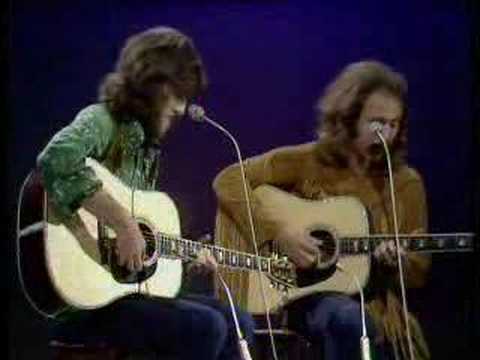
Before we end this post I have a remarkable bonus for you that I think you will really like. Graham and David performed a 30 minute acoustic set for BBC in the fall of 1970 and their performance was one for the ages. They were charming, funny, and the music was glorious. Listening to their banter highlights the strength and depth of their friendship. The following five videos will allow you to experience their entire BBC performance. I hope you enjoy it!
Part 1
Part 2
Part 3
Part 4
Part 5
Be looking for the next post in The Southern California Sound series (The Southern California Sound #12 – Not For Boys Only) next weekend.
As we start in on the 10th post of this sixteen post series it is probably a good time to revisit the premise that we started with back on March 19th. Here is a summary of the premise….
“I was recently reading a paper titled “The Problem of Excess Genius”. In this paper David Banks, a Statistician, notes “Geniuses are not scattered uniformly through time and space.” Instead, there are clumps or groupings of genius that occur at specific locations and times. Specific examples of clusters that he cited were: Athens (440 BC to 380 BC}; Florence (1440 to 1490); and London (1570 to 1640). The “Problem” referred to in the title of the paper relates to the fact that no one knows why does this occurs or what the triggering conditions for such a cluster are?………As I began to research the Southern California sound I determined that the cluster phenomenon discussed in the paper cited above was indeed at work. In a series of 16 posts (starting on Wednesday, March 21) I will build a case for that cluster and show how the musicians in two key foundational groups were the geniuses that created, refined, and influenced the Southern California sound over the time span of a decade.”
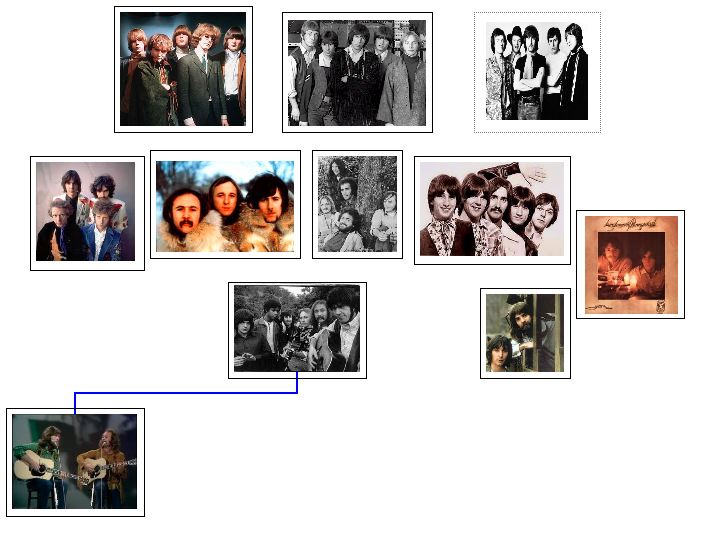
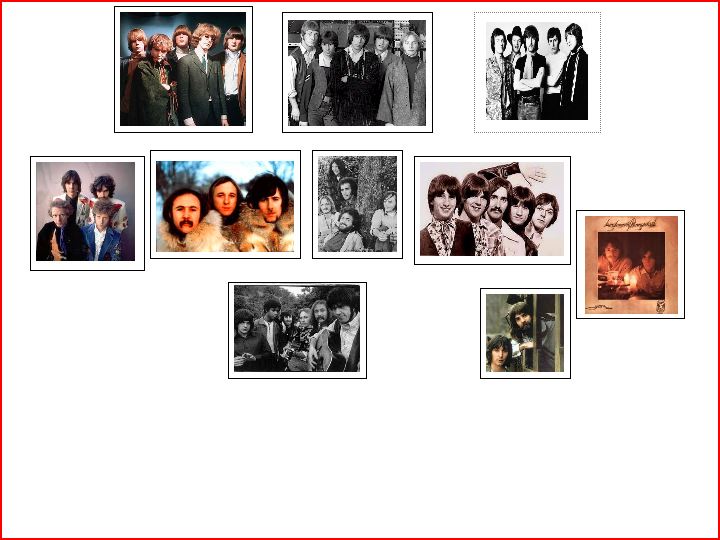
Looking back over the past two months, we have started to build the case promised above with the Byrds and Buffalo Springfield providing the foundational groups of the cluster of genius. We have shown how various members of these groups formed a number of what we might call the second generation of the Southern California sound. In today’s post we are entering a new phase of the Southern California Sound, introducing the first group that we have discussed with no links to our foundational groups.
The original paper that I discussed explained the introduction of such new groups by hypothesizing that groups of genius like to hang out together. This was certainly true with those attracted to the Southern California Sound. Like minded artist from across the country travelled to, and congregated in, Los Angeles hoping to become part of the scene. John David (JD) Souther grew up in Amarillo, Texas. Glenn Frey grew up in Detroit, Michigan. Both of them were drawn to Los Angeles in the late 1960 because it was the place to be if you were an aspiring musician. With some help from what has to be Fate, these two ended up meeting, becoming friends, sharing an apartment, and forming a musical duo that they named Longbranch Pennywhistle. (Speaking of Fate, believe it or not the neighbor that lived below JD and Glenn was Jackson Browne! These three would collaborate on some of the most amazing music that would add to the Souther California Sound in the coming years. More about that in later posts)
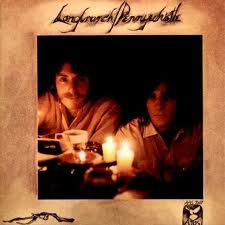
Getting back to Longbranch Pennywhistle, after playing around LA for a while they were signed to Amos records and released a self titled album. I have to say that this record has been somewhat like the Holy Grail for me in that I have searched for it for years without ever managing to find a copy. Fortunately, the advent of the Internet has allowed me listen to the music from the album even though I never managed to find a copy. If you are interested, you can download the album for free from Glenn Frey’s website (glennfreyonline.com). Until you grab your own copy, let’s listen to one of my favorite songs from the album, Rebecca.
I actually like this song, and the rest of the music from the album, but Amos records went out of business in 1971 and Longbranch Pennywhistle disbanded in 1971 with the duo never finding any significant success. Even so, the duo played an important role in the evolution of the Souther California Sound by providing an entry point into the music scene for JD and Glenn who we will talk about much more in later posts.
One more footnote before we leave Longbranch Pennywhistle behind. In 1971, after the duo disbanded, one of their songs which was not included on their album found it’s way onto the soundtrack for a movie called Vanishing Point which is one of my favorite movies of all time. It is finally available on DVD so if you are interested you should be able to find a copy. It has a great sound track and is basically one long car chase scene. Anyway, here is I Can’t Believe It, the Longbranch Pennywhistle song from the soundtrack.
As a bonus, here is a trailer from the movie Vanishing Point.
The next post in the Southern California Sound series (The Southern California Sound (11) – And Then There Were Two) should be available by next weekend.
When we last discussed Poco, they had just released their first album as a quartet having already fired Randy Meisner prior to the release of the album. As the group moved forward, Timothy B Schmidt was added to replace Randy on bass. This new configuration released Poco’s second studio album, Poco, and a live album, Deliverin. The studio album, once again, had relatively low sales but the live album captured Poco’s live show energy and became their first Top 40 album.
By late 1970, Jim Messina was starting to chafe at Richie Furray’s efforts to exert total control over the group sound and decided to leave the group and once again focus on being a producer. You might recall that this had been his original role with Buffalo Springfield before he was invited to join them upon the departure of Bruce Palmer. When Jim left Poco he was replaced by Paul Cotton who had previously been part of the duo known as Illinois Speed Press (we will definitely talk about that group in a future post).
Around the time that Jim was making his transition back to being a record producer, Columbia records was signing a new singer/songwriter named Kenny Loggins. As fate would have it, Columbia assigned Jim to produce Kenny’s first album. As work progressed on the album, Jim quickly became more than just a producer for the record. He contributed songs, sang and played on the album. It didn’t hurt that their voices sounded great together! As a result of Jim’s significant role on the album, it was named Kenny Loggins with Jim Messina – Sittin In. Soon after the release of the album, with encouragement from Clive Davis from Columbia Records, the two musicians decided to form a duo called Loggins and Messina.
As a duo, the group would go on to produce five more studio albums, achieving significant success throughout the 70’s before disbanding the group allowing Kenny to finally pursue his solo career.
While the duo produced a number of what I would consider to be overly commercial hit songs (Your Mama Don’t Dance is probably the best example) they also produced some excellent music that became a big part of the 1970’s California sound. The following song is from their first album and is one of their best.
Before we end this post, here is a live version of my favorite Loggins and Messina song which was also on their first album. Yeah I know it is pretty sappy but I still love it! My wife and I saw Kenny in a solo concert a few years ago and he said that he wrote this song when he was sixteen years old. Pretty impressive in my opinion! (sorry about the ad!)
Look for the next post in the Southern California Sound series of posts in a week or so (The Southern California Sound (10) – Where Did They Come From). I can almost guarantee that you have never heard of the group discussed in this post but you have definitely heard subsequent music that members of the group produced later in their careers.
So…as promised, here are a couple of examples of Neil’s impact on the ability of CSN to rock during live performances. Let’s start with one of Neil’s classic songs, Down By The River as performed by CSNY at the Big Sur festival in 1969.
Stephen wanted CSN to rock and I think we can agree that with the addition of Neil that goal was accomplished. Stephen and Neil’s dueling guitars were magic in Buffalo Springfield and they are just as much as so in CSNY.
As a child of the 60’s I have to admit that I have to giggle a little watching these clips from the Big Sur festival. Now that I am looking old age in the face, it all seems a little silly but if I had a time machine and could go back to that time I would do it without a second thought.
This second clip from the Big Sur festival is a mixture of Neil Young inspired CSNY rock, some true 60’s absurdity, and a beautiful acoustic performance by Stephen. Enjoy…
This wraps up the Plus One posts. Be looking for the next post in this series (The Southern California Sound (9) – Not The Way We Planned It) in the coming week
When we last discussed Crosby, Stills, and Nash the group’s self titled album had just been released to critical acclaim. You might also remember that it was Stephen that played most of the instruments during the recording of the album…they were a group but not a real band. We hinted in that post that this would become a significant issue once they decided to tour and so it was. Dallas Taylor had been brought in as drummer for the Crosby, Stills, and Nash album but they needed more…here is an excerpt from Shakey (a Neil Young Biograph by Jimmy McDonough) that picks up the story with Stephen and Dallas on the way to talk to Neil after a Crazy Horse concert. (By the way, if you are a Neil Young fan at all you really to buy Shakey and read it!)
“I’ll never forget our ride in the limo on the way to see Neil,” said Dallas Taylor, recalling a 1969 Crazy Horse gig on Long Island they were crashing. “Stephen said, ‘How would you feel about Neil joining the band?’ ‘Wow great – except isn’t that why the Springfield broke up?’ He said, ‘Oh, no, man- it’s going to be different this time. It’ll be cool .’ But there was this tone of doubt in his voice.”
With their debut album topin the charts, Crosby, Stills, and Nash were faced with the necessity of performing live – a bit of a problem, since so much of the record had been overdubbed by one-man-band Stills. Crosby and Nash wanted to keep the live presentation acoustic, but Stills had a fatal desire to hear the trio rock. Many possible musicians had been discussed and even approached before Ahmet Ertegun, at a dinner with Stills and David Geffen, suggested the obvious choice: Neil Young.
At first Neil Young was wanted only as a sideman. Ever the master manipulator, Elliot Roberts laid down the law: full partnership, equal songs. “He’d have to be a Y,” Roberts demanded. Graham Nash balked. “We’d spent a lotta time getting this beautiful harmonic sound together. I mean, Jesus Christ, wasn’t the album a huge multiplatinum success? I didn’t feel like we needed anybody else.”
Nash had never spent time around the reclusive Young, so the pair met to discuss matters over breakfast in New York City at Bleecker Street Cafe, near where the group was already in rehearsal. Young charmed Nash instantly. “Neil absolutely won me over. I came out of that breakfast two eggs over easy.”
This put Neil Young in an amazing position: He could reap the hype benefits of a smash album he didn’t even play on and in the process expose a gigantic audience to his own music. “CSNY was definitely not hurting Neil,” said Roberts. “Neil never had a downside to any of this, never. It could only help us. What we were asked to do is take something soft and give it balls….Neil’s got balls dripping from his shoulders, there’s balls in his hair, there’s balls comin down his back – he’s got balls everywhere.”
Young was definitely the guy with the balls. He gutted one band – the Rockets – to create his own, then walked into a super group with full membership status and continued to work with Crazy Horse. “Neil made it clear that CSN was not his first priority,” said Roberts. “The work was the priority, So the seeds of discontent were always there.”
Once Young was in the group, his power continued to swell. “As soon as they started to rehearse, it was clear Neil was gonna be in charge,” said Roberts. “Everyone was afraid of Neil. Because Neil walked. When Neil said, ‘Fuck you, I’m leaving,’ Neil left. Everyone else goes, ‘Fuck you, I’m leaving,’ and then they to the bathroom, roll a joint and come back. But when Neil said anything, he did it. He really did back out of Monterey. And this was terrifying to these guys because they were full of that – every other thing was ‘I’m not playing, I’m not showing.” Like little kids. Neil wasn’t into that. It was serious business.
You may not realize it but we have already seen an instance Neil’s power. In an earlier post I provided you with a video of Crosby, Stills, and Nash performing at Woodstock. In reality CSNY was at Woodstock, not just CSN but you would never know it unless you were there in person. None of the Woodstock movies or albums provided any indication that Neil was there because he refused to allow himself to be included!
The CSNY band was completed with the addition of Greg Reeves on bass and the recording of the first CSNY album, Déjà vu, was initiated.
Let’s listen to a contribution to the album from each of the four members of the group.
David Crosby – Déjà vu
Stephen Stills – Carry On
Graham Nash – Our House
Neil Young – Helpless (alternate mix)
I have to say that I like the Déjà vu album, but I also need to say that it did not achieve Stephen’s goal of having the group rock! The Rolling Stone review from April 1970 echoes my opinion:
“Along with many other people, I had hoped that the addition of Neil Young to Crosby, Stills, and Nash would give their music the guts and substance which the first album lacked. Live performance of the group suggested this had happened. Young’s voice, guitar, compositions, and stage presence added elements of darkness and mystery to songs which had previously dripped a kind of saccharine sweetness. Unfortunately, little of this influence carried over to the recording session for Déjà vu.”
Later this week, in a Part 2 of this post, we will listen to some examples of the group in concert at the Big Sur Festival in 1969 to appreciate Neil’s additions to the group’s live performances.
For now let’s wrap it up Part 1 of this post by noting that CSNY continue through today to break apart, and come together, at the whim of Neil. Déjà vu, in my opinion, was the artistic zenith for the group.
When Neil, has not been interested, CSN has continued to be very successful at times, although David Crosby’s drug problems in the 70s and 80s created some significant issues for the group. Crosby, Stills, and Nash have also all had successful solo careers and successful side projects. We will check in on some of these side projects in subsequent posts in this series.
When we last looked in on the Byrds, David Crosby had been fired and Michael Clarke had quit leaving the group with only two members Roger McGuinn and Chris Hillman. The remaining Byrds needed a band and moved quickly to hire Kevin Kelley, Chris Hillman’s cousin, as a drummer and Gram Parsons as pianist. The key word here is hired, with both of the new band members coming on board as paid sidemen rather than full members of the group. The group appeared to jell and although not a full member of the group Gram immediately became a major force in the band, quickly moving from piano to guitar. Roger McGuinn was quoted in a May, 1968 article in Rolling Stone (Byrds: New Personnel For Some Old-Time Country Music) as saying “Gram added a whole hunk of country. Gram’s bag is country and we’re going to let him do his thing, and support him and work together on things.” The Byrds headed south, literally and figuratively. A good portion of their upcoming album was recorded in Nashville and their new sound was not the “country rock” sound of Poco but real serious, honest to God, traditional country music. You got a taste of this in Hickory Wind, a Gram song that I posted earlier this week. Here is another taste with Gram and the Byrds tackling Merle Haggard’s Life In Prison.
Just because the Byrds embraced county music, doesn’t mean that Nashville embraced them! You have to remember that this was the 60’s and being a long haired hippie, especially in the south, was taking your life in your own hands. They were soundly booed when they became the first rock group to play at the Grand Ole Opry and they were ridiculed during their appearance on WSM radio.
In the midst of the Byrds move to country music there was a real power struggle going on within the band. Gram was exerting more influence, and from everything that I have read, he was intent on taking over the band but this was never going to happen given that he was not a full member of the group. You could almost sense that things were not going to end well and the situation moved quicker than anyone might have predicted. There is no better way to hear the story than straight from the people that were there and lived it. I think you will enjoy this. (Don’t get confused by the title of the video, it actually traces the whole story of Gram and his time in the Byrds in less than five minutes)
So…Gram was out of the Byrds and the album that he so greatly influences, Sweetheart of the Rodeo, was still two months from being released. Gram wrote the only two original songs on the album and recorded the majority of the lead vocals before his departure; however, his role in the released album was greatly reduced during post-production work on the album prior to its release. The most significant change was that Roger McGuinn erased many of Gram’s lead vocals replacing them with his own. Gram’s vocals on Hickory Wind and Life In Prison were left untouched which is why I selected them for your listening enjoyment.
By now the Byrds were used to dealing with personnel turnover and they kept moving forward hiring Clarence White to replace Gram on guitar. But more change was in the air. Chris Hillman left the band a couple of months after Gram due to financial issues associated with the Byrd’s business manager. This left Roger McGuinn as the last original member of the Byrds, a position that left him in firm control of the band. He,and a revolving cast of sidemen, would go on for another five years and a number of albums before finally calling it quits in 1973. Although there would still be some interesting Byrd’s music to come their career had clearly peaked so we will leave them behind. While the Byrds were coming in for a landing a new group was taking flight on wings made out our tortillas.
It wasn’t long before Gram and Chris hooked up following their individual departures from the Byrds. If you watched Chris on the video above it was clear that he had found a kindred sprit in Gram, so it was really not a surprise to see them team up. They named the new group the Flying Burrito Brothers and recruited “Sneaky Pete Kleinow (steel guitar) and Chris Ethridge (bass) to round out the initial group. They used a variety of different drummers in their early work and eventually hired Michael Clarke (you will remember him as one of the original Byrds) as a full time drummer.
It will come as no surprise that the band had a seriously country sound. This sound was highlighted throughout their first album, named The Gilded Palace of Sin, on which all but two of the songs was written by Gram and/or Chris. The album would prove to be incredibly influential over time. It is ranked at 195 on Rolling Stones top 500 album list and was a major influence on all country rock/alt country performers that would follow in their path. Amazingly the album would never achieve any significant commercial success as reflected in the fact that it still has still not achieved Gold record status over 40 years after its release. Enough talking, let’s have a listen to Sin City written by Gram and Chris.
Now let’s listen to my favorite song from the album, Christine’s Tune, which was also written by Gram and Chris. As always, I apologize in advance for the advertisement in the video.
In my opinion that song/video is perfect: the suits; Gram and Chris trading lead vocals; the vocal harmony between Chris and Gram; and the crazy psychedelic sound that Sneaky Pete got out of that steel guitar. I would really like to be able to end this story right here on that high note but unfortunately I can’t.
The band started to come apart pretty quickly. Chris Ethridge left and was replaced by Bernie Leadon. Gram and Chris Hillman started to fall apart as Gram started to go off the deep end with drugs. Their next album Burrito Deluxe was cobbled together in the studio and featured little of the collaborative songwriting that had made the first album so special. Gram left soon after the albums release and as far I am concerned the Burritos that I knew and loved ended at that point. The band would trudge on running through a number of talented musicians (Rick Roberts, Al Perkins, Byron Berline, etc.) some of which will show up in later posts.
Gram will not be discussed in future posts in this series but we will come back to address the remainder of his career in a dedicated post in the future. For now I will give you the Readers Digest version of the sad story. His drug use continued to worsen after leaving the Burritos. He had a short but eventful solo career before dying of a drug overdose in 1973. The events following his death have taken on legendary status. and I will save them for the promised dedicated post in the future.
For now, I will leave you with this trailer from the Fallen Angel documentary about Gram.
I am working on the next post in The California Sound series and hope to have it ready by the end of next week. In the meantime, I thought you might enjoy a preview. In our next California Sound post we will check back in with the Byrds after the departure of David Crosby. You might say that things went South…no I don’t mean that things went bad, what I mean is that things went Country. Listen to this song from their first album after David’s departure and you will see what I mean.
So, in the last couple of posts we have talked about what happened to Stephen Stills, Richie, Furary, and Jim Messina after the breakup of Buffalo Springfield and I bet some of you might be wondering what happened to Neil Young. Looking back on the second post in this series you might recall that Neil had already left Buffalo Springfiled a couple of times before the band officially broke up so he had more time to plan his future moves than the rest of the guys. Soon after the breakup he was quoted as saying “I never wanted to be in a group. I came out here to make as a single…” and that was the path that Neil resumed with the breakup of Buffalo Springfield. Neil selected Elliott Roberts as his manager after the breakup of the group and, amazingly, Elliott is still his manager today. With the help of Elliott, Neil was signed to a recording contract with Warner/Reprise records and work on his self titled solo was initiated in mid-1968. David Briggs produced the album kicking off a relationship with Neil that lasted through David’s death in 1995. The Rolling Stone review of the album stated: “One could very easily view this disc as an extension of Young’s work on the Buffalo Springfield Again album….” and I agree that the album was somewhat of a natural progression. Let’s listen to my favorite song from the album.
Much of the remainder of the album seemed to be over produced, in my opinion. Here We Are In The Years is one example that highlights the over production.
This excerpt from Shakey (a Neil Young biography written by Jimmy McDonough) serves to somewhat build a case for my opinion “Neil Young shows Briggs and Young in a conventional L.A. studio setting: building tracks piece by piece, playing around with string sections, echo chambers and limiters, making the smooth, seamless, professional record expected of them. Who knew it would be their last?”
At this point you might be saying, that quote doesn’t make sense! I though you said Neil and David worked together through 1995, how could Neil Young have been their last? Well that isn’t what Jimmy McDonough meant. What he meant was that this would be the last time that Neil and David did anything that was expected of them. Neil Young was, and continues to be, a chameleon and after the release of Neil Young he was getting ready to change everything.
Neil had stumbled onto a group called The Rockets during his Springfield days and over time their relationship grew closer (read Shakey if you are interested in the details). He eventually played with them during one of their gigs at the Troubadour and something in Neil clicked. While the sound on his first album was over produced, the sound when he played with the Rockets was raw, improvisational, and exactly where Neil wanted to head next. After a follow-on jam session with three members of the Rockets (Danny Whitten on guitar, Billy Talbot on bass, and Ralph Molina on drums) Neil named the trio Crazy Horse and they went into the studio in 1969 to record Neil’s next album Everybody Knows This Is Nowhere (credited to Neil Young with Crazy Horse). Let’s listen to a couple of songs from the album. First up is Cinnamon Girl, my favorite song from the album.
Next up is the title track from the album, Everybody Knows This Is Nowhere.
Quite a difference between the sound of these two songs and Here We Are In The Years from the first album isn’t there? Neil had found his niche.
With the release of his first two albums, Neil’s solo career was off and running and it was hard to imagine him ever going back to being a member of another group that he did not exercise complete control over. But we shall see…..don’t forget what I said about Neil being a chameleon! We will check back in on Neil’s career in a future post in the Southern California Sound series.
We now return you to our regularly scheduled programming….
So, when we checked in on Buffalo Springfield in The California Sound (4) the group had broken up. Richie Furay and Jim Messina took some tracks recorded prior to the breakup and used them to create a final contractually required Buffalo Springfield record that was appropriately titled Last Time Around. Lets listen to Kind Woman, one of Richie’s songs that was included on that album.
This song, like many of the others on the album, was really more of a solo effort than a Buffalo Springfield song. It featured Richie, Jim, and a pedal steel guitar player named Rusty Young who added to the country sound of the song. Richie and Jim had a mutual love of the country sound reflected in Kind Woman and with the demise of Buffalo Springfield decided to form their own band, Poco, that could focus on that sound. Rusty Young was a known quantity based on Kind Woman and was a natural for the new group as the pedal steel player. The group was completed with the addition of George Grantham on drums and Randy Meisner on bass.
As we mentioned in The California Sound (4) post, Richie Furay was “traded” to Epic records in a deal to free Graham Nash to join David Crosby and Stephen Stills on Atlantic Records, so Poco was of course signed to Epic records. The groups first record for Epic was named Pickin Up The Pieces (I have always assumed that this was a reference to Richie and Jim starting over again after the collapse of Buffalo Springfield). The music on the album was a natural progression from Richie’s and Jim’s contributions to Buffalo Springfield. The album was not a huge commercial success but it is generally recognized as one of the earliest examples of the new country rock music genre that was starting to take shape. From a song writing perspective, the album was dominated by Richie. Here is Pickin Up The Pieces, the title song from the album, written by Richie.
Let’s listen to You Better Think Twice from Jim and then we will talk about some changes in the group that took place even before the release of Pickin Up The Pieces.
The album triggered the first in a long running series of band personnel changes that continue through today. When watching the two videos above, you might have noticed that someone was missing from the album cover illustration. Randy Meisner had left (or was kicked out of) the band immediately before the album’s release and his image was removed from the album cover and replaced with the dog (that was pretty cold in my opinion). Based on multiple sources that I have read, the root of the issues associated with Randy’s departure from the band was a disagreement between him and Richie about the mixing of the album. Randy’s view of the situation is summarized on www.randymeisneronline.com “When Poco began recording its first album, Pickin’ Up the Pieces, Meisner realized how little the band’s founders Furay and Messina thought of him. They considered him little more than a session player, allowing him no input into the production of the songs. Dissatisfied, Meisner complained that he might as well not be a part of the band if that was the way they looked at him. They agreed, and fired him.” We will check in with Randy’s career in future posts in The Southern California Sound series.
Looking at the following list of the various incarnations of Poco (thanks to Wikipedia for this list) will give you a better idea as to the number of personnel changes that have taken place in the band over time.
Poco Lineups Over Time (from Wikipedia Poco Article)
Rusty Young – pedal steel guitar, banjo, Dobro, guitar, mandolin, lap steel guitar, electric guitar, acoustic guitar, vocals
Jack Sundrud – bass, acoustic guitar, vocals
George Lawrence – drums and percussion
Michael Webb – keyboards, B3, electric guitar, accordion, mandolin, vocals
What was your favorite Poco lineup? I can tell you that my favorite Poco music came from lineups from the early to mid-1970s. We will check back in on Poco, and the fate of some of its members, in upcoming posts from The Southern California Sound series. Look for the next post in the series sometime before next weekend.




 thebestmusicyouhaveneverheard