In 1987 the Bangles were huge having released major hit singles and albums during the previous three years. The group sounded great, looked even better, and I was in love with Susanna Hoffs (far left hand side in the picture above). I know, I know….but how could you not fall in love with that?
The girls were picked to record a song for the soundtrack of Less Than Zero. Instead of writing an original song for the movie, they decided to cover a song that was more than twenty years old…..A Hazy Shade Of Winter. The song was written by Paul Simon and recorded by Simon and Garfunkel in 1966. At first glance the pick was a strange one. The original was an acoustic song and sounded nothing like a Bangles song but the girls were not looking to do a note for note cover…..they had plans. With the help of producer Rick Rubin they turned the song into a rocker with a killer riff. Let’s listen…….
The song was a huge hit, rising to #2 on the Billboard singles chart but amazingly enough was not included on any Bangles album until they released a greatest hits album.
Amazingly the Bangles cover was a much bigger hit that Simon and Garfunkel’s original recording that topped out at #13 on the 1966 Billboard singles chart and was later included on their Bookends album.
Let’s listen to the original…….
I love both versions of the song but have to say that The Bangles deserve a lot of credit for reworking the song and making it their own! As always, let me know what you think….
I have been reading Neil Young’s new book, Waging Heavy Peace, over the past several weeks. I got the book for Christmas and have really been enjoying it. I would highly recommend it for Neil Young fans but I doubt that others will find the it to be enjoyable. It rambles a lot, making significant leaps across Neil’s career as he tells his story and that alone is probably enough to put off all but hardcore fans.
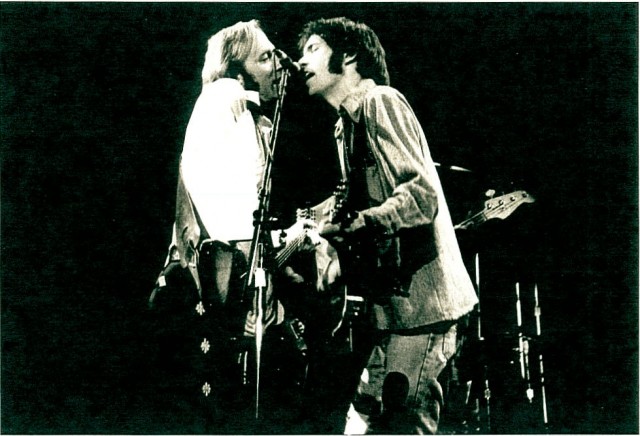
I like it for the little insights that it provides about Neil and his music. As one example, the love and respect that Neil has for Stephen Stills comes through loud and clear in the book. This information helps me to understand how they have continued coming back together to make such great music over the last 40-50 years after having many rough patches in-between. The end of the Stills-Young band was one of those rough patches and I posted last year about the abrupt end of that tour. Speaking of the Stills-Young band, the book also helped me understand Long May You Run, a song that was recorded the band.
I noted in last year’s post that song was written about a car but I didn’t have the details until I read the book. Neil talk at length about Mort, a 1948 Buick Hearse that his mother bought for him. The demise of Mort is described as part of a discussion of Neil’s decision to leave Fort Williams where he and his first band, The Squires, had been playing.
Late one night I was hanging out with a bunch of guys from local bands, some guys from the Bonnevilles and Terry Erickson, a bass player who also played good guitar. We were thinking of him becoming a Squire and had even taken some pictures together. I decided to drive Terry to Sault Set. Marie in Mort. We jumped in the hearse and left. Just like that. Ken was back at the YMCA, so he missed the trip and was left behind. Bob Clark and the Bonnevilles came along with us. We took Terry’s motorbike with us in the back of Mort.
We were about halfway there, near a town called Blind River, when we broke down. Mort’s transmission was toast. We got towed to Bill’s Garage, a harrowing experience with the hearse being towed backward, the rear tires in the air and me steering in reverse. After holding on for dear life at high speed and terrified, we finally got to Bill’s Garage in Blind River, Ontario. Bill said he could find us a part to fix the hearse and get us going. Several days later, we were still there and running out of money; we were living on roasted potatoes from the market . We hung out in an old junkyard/dump near the edge of town.
A graveyard was just across a gravel road from that dump. We were a funky lot. The Bonnevilles hitched back to Fort Williams for a gig they had that weekend. Bob went with them. Realizing that Mort was gone, I thought that being in Fort William without the hearse would be nowhere. It was a feeling. The hearse was just part of the whole thing. The picture the image. There is an intangible to a group and a persona. You can’t lose that. If you do, you have to start again. I felt that Mort was a large part of my identify, so I took off with Terry to North Bay…..
So that was the end of Mort! Here is the song that Neil wrote many years later about Mort…..
This sequence of events ended up being a big turning point in Neil’s career. It’s funny how fate, in this case the death of Mort, can have such a huge impact a person’s life! In case you are interested, here is a picture of The Squires with Mort.
See how many references to the events described above you can find in the lyrics to Long May You Run.
We’ve been through
Some things together
With trunks of memories
Still to come
We found things to do
In stormy weather
Long may you run.Long may you run.
Long may you run.
Although these changes
Have come
With your chrome heart shining
In the sun
Long may you run.Well, it was
Back in Blind River in 1962
When I last saw you alive
But we missed that shift
On the long decline
Long may you run.
Long may you run.
Long may you run.
Although these changes
Have come
With your chrome heart shining
In the sun
Long may you run.
Maybe The Beach Boys
Have got you now
With those waves
Singing “Caroline No”
Rollin’ down
That empty ocean road
Gettin’ to the surf on time.
Long may you run.
Long may you run.
Although these changes
Have come
With your chrome heart shining
In the sun
Long may you run.
Let me leave you with another great Neil song from the Sills-Young band album. Neil wrote this one about the hotel in Miami that the band was staying at during the recoding of the album.
If you have been reading this blog you probably know that I am a huge “power pop” fan. When first heard The Raspberries (a band out of Cleveland, Ohio consisting of Eric Carmen (vocalist/guitarist/bassist), Wally Bryson (guitarist), Jim Bonfanti (drummer), and Dave Smalley (guitarist/bassist)) on my car radio in 1972 I was instantly in love. The lead singers voice was great, the guitar sound was perfect, and the harmonies were amazing. Who could ask for more. Listen up and you can experience that moment I had in 1972…….
I bought the album the same day that I first heard Go All The Way and it was amazing. As an aside, the album came with a “scratch and sniff” sticker attached to the album cover that smelled just like Raspberries. I have had that album and the sticker for over forty years and guess what…..it still smells like Raspberries. Amazing!
Success was ensured and it wasn’t just me that thought so. Here is an excerpt from the May, 1972 Rolling Stone review of The Raspberries self titled first album.
Raspberries opens with the finest burst of lightweight English rock I’ve heard all year, a raunchy 16-bar guitar intro, and followed by a verse that sounds like a cross between “Reflections Of My Mind” and early Badfinger. The rest of the album is just as ephemeral, and just as good.
The funny thing is that the Raspberries aren’t English at all—they’re from Cleveland, Ohio. Just like the Wackers, though that hasn’t stopped them in cultivating a perfect three-part English group harmony, and the Raspberries go one further by even looking strikingly English. When you’re dealing with groups whose aim is to do energetic, melodic rock, nationality simply seems to be no deterrent.
What makes this album easy to recommend is the fact that there really isn’t a bad cut on it. With the exception of “Rock A Roll Mama,” an only slightly above-average rocker, and “With You In My Life” (a nice uptempo good-timey number), Raspberries is composed in toto of potential hit singles, all with excellent vocals and terrific production. Even the eight-minute piece “I Can Remember” works superbly, flowing through several sequences and ending with an irresistible chorus.
And if you’ve heard either of the Raspberries’ two singles on the radio, “Don’t Want To Say Goodbye” and the aforementioned album opener “Go All The Way,” you already know how infectious their music is. With the original material quite impressive, and the filler cuts all adequate, Raspberries is much more impressive than Badfinger’s debut album, and I find myself already looking forward to the group’s second.
Well……no matter what me and Rolling Stone thought the album topped out at #51 on the album charts. No where near the hit it deserved to be. Their second album, Fresh, continued to build on the best aspects of their first album. Let’s listen to I Wanna Be With You from Fresh……
Great…..right? Well it did a little better than the first album but still only reached #36 on the album charts. What the heck was going on? Here is how my old standby, Lillian Roxon’s Rock Encylopedia, explained it……
The Raspberries died an untimely and unnecessary death in the music business, a demise their talent did not deserve. It was all a matter of image, you see. It just wasn’t right for any band to be so overtly UNhip. None of these guys looked like Easy Rider outtakes when they started back in the early seventies. They also committed the sin of writing crisp, clean singles that didn’t deal with the doings of tragic anti-heroes. Hailing from the Cleveland area, the foursome (high school chums)demoed a few tunes that came to the attention of producer Jimmy Ienner. Jimm brought them to Capital Records and produced their first (and subsequent) album(s). THE RASPBERRIES was released in 1972 with some suggestion of hype. The band’s sound was pseudo-British, the execution flawless and their success almost immediate.
The boys in the band, fairly sophisticated in their idea of what success would bring, decided to play the image “goof” schtick to the hilt. They sounded so mid-sixties, they decided to dress it as well. It was all sort of humorous , you see. Of course, no thought it was funny.
The band was putting out killer pop music but the majority of the music music buying public just wasn’t interested. I don’t know that I buy that it was all in their marketing but no matter….. their lack of success was a tragedy (in my opinion). Things did not get better. The Raspberries third album, Side 3, showed continued artistic growth but market just wasn’t interested. Let’s listen to Ecstasy from that album……
Side 3 only reached #136 on the charts. The bands dreams were crashing around them and the lack of success was ripping the band apart. Jim Bonfanti and Dave Smalley left the band at this point. Eric Carmen and Wally Bryson decided to make one final push for success with Scott McCarl and Michael McBride replacing the departed members of the band.
This final push resulted in a fourth album, Starting Over, which to this day is one of one of the best pop albums of all time. Let’s listen to Overnight Sensation which is one of the best singles I have ever heard…..
You might be thinking that this story is headed for a happy ending but I am sorry to tell you that is not the case. Here is what happened as described in Eric Carmen in a 2007 interview on bullz-eye.com…
…..we did the Starting Over album, and Rolling Stone picked it as one of their seven best of the year in their annual writers and critics poll, and they picked “Overnight Sensation” as the best record of the year, and we subsequently sold the fewest number of copies of any of our records, and played every hole on the east coast for six or seven solid months of demoralizing gigging. And that was pretty much the end of it. We realized at some point that there was no way to climb out. What we had tried to do had been successful on one level, and a complete bust on another level. The rock critics got it, and the 16-year-old girls got it, but FM radio was just not about to play a band that sounded like they were making singles, and so it was kind of like beating your head against the wall at a certain point. It was time to move on and try something else.
I think the band knew that they were doomed while making the album. Listen to The Party’s Over another song from Starting Over and I think you might agree.
The Party’s Over
Life is funny. Sometimes your best efforts don’t pay off. Sometimes you don’t get the rewards that you deserve. It’s not fair but no ever promised it would be. If you didn’t know that before, The Raspberries are living proof. As always, let me know what you think.
Aerosmith is an American rock band that started in New Hampshire in 1970 before moving to Boston in a push to make it to the big time. Their path to success proved to be a long one. Although they developed a local cult following in Boston they were having trouble breaking out of that local market. The band finally took things into their own hands inviting Clive Davis of Columbia Records fame to see them at Max’s Kansas City in New York City. Unfortunately, Aerosmith was not scheduled to play in the club that night and ended up having to pay to perform. Their investment was rewarded with a Columbia recording contract.
Aerosmith’s self titled first album was released on January 13, 1973 but it failed to garner critical acclaim or significant sales. They released their best song from the album, Dream On, as a single but it also failed to have any significant success (we will talk more about Dream On in a later post). Fortunately the band didn’t give up! They hit the road touring, taking their case to the American people. Their relentless touring was a major factor in them eventually achieving the level of success that they deserved..
While Dream On clearly had the best chance of becoming a hit single for Aerosmith, the song that immediately caught my attention on their first album was Mama Kin. Let’s listen….
From the first time I heard Aerosmith, I kind of thought about them as America’s answer to the Rolling Stones. This feeling was reinforced when I caught them on one of their early tours. The on-stage interplay between Steven Tyler and Joe Perry was great and Steven was a fearless performer. There was a big curtain blocking the stage as Aerosmith’s equipment was set up the first time I went to see them around 1974. When the curtain finally started to rise Steven danced out to edge of the stage as the band started to play. The curtain malfunctioned about half way up and it rolled back down trapping the band behind the curtain and Steven on the edge of the stage in front of the curtain. No one missed a beat! Steven spent the whole first song dancing on about 6 inches of stage in front of the curtain until the roadies fixed the problem and finally got the curtain raised. It was a great moment….Steven acted like that was exactly the way they planned it. He was super cool and I was impressed.
I wish I had a video of that performance to show you but unfortunately I don’t. Instead, here’s a TV appearance from 1974 with the band playing Train Kept A Rollin.
While Aerosmith’s first album is by no means my favorite it was certainly enough to get my attention and make me look forward to better things that I knew would come in their subsequent albums. If you are interested in hearing more of their first album, you can listen to the whole thing below. I think you will say it was time well spent.
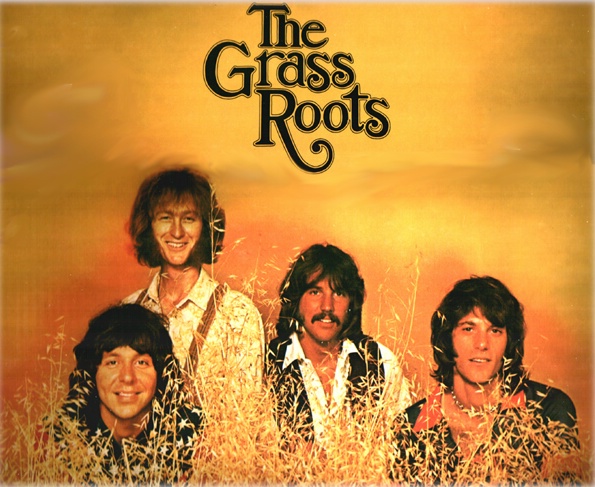
My friend Gerard from the Netherlands never ceases to amaze me. We me met through this blog and have discovered that our backgrounds and musical tastes are extremely similar. A while back he sent me some articles about, and songs from, a group called The Grass Roots.
Unbeknownst to Gerard, The Grass Roots have always been one of my favorites but I have never really talked much about them because I always thought that they were a “manufactured” group along the lines of the Monkees. The material that Gerard sent me (a summarized version is provided below) convinced me that I might have been wrong about The Grass Roots.
The name “Grass Roots” (originally spelled as “Grassroots”) was the name given by PF. Sloan and Steve Barri for an LA group. With this group they would try to jump on the folk-rock bandwagon started by the Byrds. One of their songs, “Where Were You When I Needed You”, was recorded by Sloan and Barri together with a now forgotten line-up of session musicians. Sloan was the lead singer and played the guitar. This song was made under the name “The Grass Roots” and was sent as a demo to some radio stations in Los Angeles.
The response to the song was lukewarm so Sloan and Barri started to search for a new group who who would record as “The Grass Roots”. They found a San Francisco outfit, “The Bedouins”’, and together with this group they recorded a new version of “Where Were You When I Needed You”. They also recorded an album by the same name. This version of the Grass Roots was moderately successful but didn’t last too long because the members of the group wanted to record more of their own material.
Here is what I found on Wikipedia to fill in the story of The Grass Roots from 1967 forward.
The group’s third — and by far most successful — incarnation was finally found in a Los Angeles band called The 13th Floor (not to be confused with the 13th Floor Elevators). This band consisted of Creed Bratton (vocals, guitar), Rick Coonce (drums, percussion), Warren Entner (vocals, guitar, keyboards), and Kenny Fukomoto (bass) and had formed only a year earlier. Entner, who had been attending film school at UCLA alongside future Doors members Jim Morrison and Ray Manzarek, was drifting through Europe in the summer of 1965 singing and playing on street corners, when he met fellow busker and American Creed Bratton in Israel, where an Israeli businessman expressed interest in managing and promoting them. But the duo moved on and ended up back in LA by 1966, where they formed the 13th Floor and submitted a demo tape to Dunhill Records. After Fukomoto was suddenly drafted into the army, the group went through two replacements before finding singer/bassist Rob Grill. In 1967 the band was offered the choice to go with their own name or choose to adopt a name that had already been heard of nationwide.
In the beginning, they were one of many U.S. guitar pop/rock bands, but with the help of Barri and their other producers, they developed a unique sound for which they drew as heavily on British beat as on soul music, rhythm and blues and folk rock. Many of their recordings featured a brass section, which was a novelty in those days among American rock bands, with groups like Chicago just developing.
The bulk of the band’s material continued to be written by Dunhill Records staff (not only Sloan and Barri) and the LA studio-musicians who were part of what became known as theWrecking Crew played the music on most, if not all, of their hits. The Grass Roots also recorded songs written by the group’s musicians, which appeared on their albums and the B-sides of many hit singles.
As The Grass Roots, they had their first Top 10 hit in the summer of 1967 with “Let’s Live for Today”, an English-language cover version of “Piangi con me”, a 1966 hit for the Anglo-Italian quartet The Rokes. “Let’s Live for Today” sold over one million copies and was awarded a gold disc. With Rob Grill as lead singer, they recorded a third version of “Where Were You When I Needed You.” The band continued in a similar hit-making vein for the next five years (1967–1972).
So, inspired by Gerard, here is the summary of what I discovered. The Grass Roots that I have always loved were initially a formed as a group called the 13th Floor (they were not a “manufactured” group after all). The 13th Floor was presented with a unique opportunity to change its name to the The Grass Roots, a name that was already familiar to listeners based on the success achieved by the earlier version of the group that Gerard provided information on. The 13th Floor jumped at this chance and made the best of it by producing a set of great singles in the next five years.
Enough history….let’s listen to some great songs from The Grass Roots.
First up is a song from the second incarnation of the group……Where Were You When I Needed You (note: The images shown with this song are a little confusing since they include pictures of both the second and third incarnations of the group).
Now let’s listen to some music from the third incarnation which in my opinion represents the glory years of the group with Rob Grill handling much of the lead vocals. First up is Let’s Live For Today (1967)….
Midnight Confessions (1968)
I’d Wait A Million Years (1969)
Temptation Eyes (1971)
Live Performance of a Medley of Hits
I hope you agree with me, and Gerard, that The Grass Roots were an amazing band that needs to be remembered and celebrated.
I am sorry to report that Rob Grill passed away in 2011 at the relatively young age of 67. This post is dedicated to him…..RIP Rob!
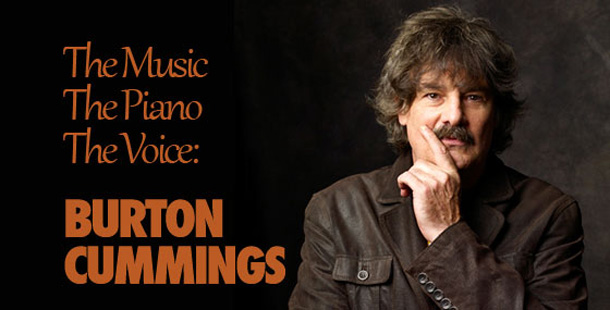
One of the first singles that I can remember buying was No Time by The Guess Who (written by Burton Cummings and Randy Bachman). I think this was the start of my love for all things Canadian! I listened that song so much that I couldn’t sleep when I went to bed at night because the lyrics were running through my head:
….No time, no time, no time, no time
No time, no time, no time, no time
I got, got, got, got no time
I got, got, got, got no time
I got, got, got, got no time
No-no-no, no-no-no, no time
No-no-no, no-no-no, no time…..
Ok, you get the point and the lyrics weren’t that great but maybe you have to hear the song to appreciate my infatuation. Let’s listen….
I loved The Guess Who then (and now) and the big reason was that I love Burton Cummings voice. The man could belt a song like few others.
I tell you all of this so that you will understand how upset I was in 1975 when I heard that Burton Cummings was leaving The Guess Who to go solo, effectively killing the band (yes i know that something called The Guess Who kept performing but don’t even get me started on that!). Of course I bought Burton’s first solo album and neither that album, nor any of his other solo albums, came close to capturing the magic of the Guess Who. However……Burton’s first solo album did include one kick ass ballad, Stand Tall, that really highlighted his his amazing voice. Let’s listen…..
It’s funny to me how many people leave bands to go solo only to never again capture the magic that they had in the band. In the coming year we will explore more examples of this unfortunate phenomenon.
While we are on the topic of The Guess Who, can anyone tell why they are not in the Rock and Roll Hall of Fame??? No…..I didn’t thank so! You can help get them in by visiting the following site and signing the online petition. What are you waiting for….do it!
As I mentioned in my recent post about the release of Bruce Springsteen’s first album (Greetings From Asbury Park), “Blinded by the Light” was the first song on the album. It was also Bruce’s very first single but it failed to have any impact on the charts. Let’s listen….
Fortunately for Bruce, Manfred Mann’s Earth Band chose to include Blinded By The Light on their 1976 album, The Roaring Silence. Their version was much more rock oriented than Bruce’s and ended up scoring them a #1 hit on the US charts in early 1977. You may find this hard to believe Manfred Mann’s recording of Blinding By The Light is the only Bruce Springsteen song to ever reach #1 on the singles chart. Let’s listen….
As noted in the extract from Wikipedia provided below, Manfred Mann’s Earth Band chose to change a few of the lyrics to the song when they recorded. Bruce has jokingly referred to these often misheard revised lyrics as the source of their success.
The Earth Band’s recording of the song features several changed lyrics. The most prominent change is in the chorus, where Springsteen’s “cut loose like a deuce” is replaced with “revved up like a deuce.”
This is commonly misheard as “wrapped up like a douche (the V sound in “revved” is almost unpronounced and the S sound in “deuce” is easy to mistake as an “SH” sound).” Springsteen himself has joked about the controversy, claiming that it was not until Manfred Mann rewrote the song to be about a “feminine hygiene product” that it became popular.
If you read Saturday’s post about Greetings From Asbury Park you might recall that I referred to Blinded By The Light as wordy. Just to prove my point, the original lyrics to the song are provided below:
Madman drummers bummers and indians in the summer with a teenage diplomat
In the dumps with the mumps as the adolescent pumps his way into his hat
With a boulder on my shoulder feelin kinda older I tripped the merry-go-round
With this very unpleasing sneezing and wheezing the calliope crashed to the ground
Some all-hot half-shot was headin for the hot spot snappin his fingers clappin his hands
And some fleshpot mascot was tied into a lovers knot with a whatnot in her hand
And now young scott with a slingshot finally found a tender spot and throws his lover in the sand
And some bloodshot forget-menot whispers daddys within earshot save the buckshot turn up the band
And she was blinded by the light. cut loose like a deuce
Another runner in the night. blinded by the light
She got down but she never got tight, but shell make it alright
Some brimstone baritone anticyclone rolling stone preacher from the east
He says: dethrone the dictaphone, hit it in it’s funny bone, that’s where they expect it least
And some new-mown chaperone was standin in the corner all alone watchin the young girls dance
And some fresh-sown moonstone was messin with his frozen zone to remind him of the feeling of romance
Yeah he was blinded by the light. cut loose like a deuce
Another runner in the night. blinded by the light
He got down but she never got tight, but he’s gonna make it tonight
Some silicone sister with her managers mister told me I got what it takes
She said I’ll turn you on sonny to something strong if you play that song with the funky break
And go-cart mozart was checkin out the weather chart to see if it was safe to go outside
And little early-pearly came in by her curly-wurly and asked me if I needed a ride
Oh, some hazard from harvard was skunked on beer playin backyard bombardier
Yes and scotland yard was trying hard, they sent a dude with a calling card,
He said, do what you like, but don’t do it here
Well I jumped up, spit in the air, fell on the ground, asked wich was the way back home
He said take a right at the light, keep going straight until right, and then boy you’re on your own
And now in zanzibar a shootin star was ridin in a side car hummin a lunar tune
Yes, and the avatar said blow the bar but first remove the cookie jar, were gonna teach those boys to laugh too soon
And some kidnapped handicap was complaining that he caught the clap from some mousetrap he bought last night
Well I unsnapped his skull cap and between his ears I saw a gap but he’d figured he’d be all right
He was just blinded by the light. cut loose like a deuce
Another runner in the night. blinded by the light
Mama always told me not to look into the sights of the sun
By the beginning of 1972 Bruce Springsteen had been playing music for six years in a variety of New Jersey based bands but had not yet landed a recording contract with a major label. In 1972, after auditioning for John Hammond at Columbia Records, he was finally signed to a recording contract. Unfortunately, that same John Hammond had signed Bob Dylan to Columbia ten years earlier and this fact triggered the inevitable comparisons between Bruce and Bob. As I noted in a post from last year (Just A Story From America), Dylan comparisons are normally the fastest way to kill a musician’s career. That Just a Story From America post focused on Elliott Murphy, a very talented contemporary of Bruce, whose career was destroyed by similar Dylan comparisons.
So….Bruce finally had his recording contract and it was now time to produce an album to justify the confidence that John Hammond had shown in him. His album, titled Greetings From Asbury Park, was released on January 5, 1973. On the positive side, Bruce had assembled a kick ass band that would soon be referred to as the E Street Band. On the negative side, the songs on the album did little to refute the Dylan comparisons. The very wordy first track, Blinded by the Light, screamed Bob Dylan and this served to only increase the dreaded Dylan comparisons.
The album was overlooked by most people in 1973 and only sold 25,000 copies. Even so, the album provided some glimpses of the Bruce that we all would come to love in just a couple of years. Let’s listen to Growin’ Up, the second track from the album…..
While this is a clever well written song that shows that Bruce would be a force to be reckoned with, I have to say that listening to this studio version doesn’t reach out, grab you, and make you an instant fan! My point here is that Bruce we know and love is not just a great songwriter he is an incredible performer and in 1973 most of the world had not seen this side of Bruce. It was performer side of Bruce, when combined with Bruce the songwriter, that would propel his career beyond the Dylan comparisons and launch it into the stratosphere. Don’t believe me??? Listen to this live version of Growin’ Up from 1975 where Bruce, the performer/storyteller/songwriter elevates this same song into an amazing event…..
Forty Years Ago Today, with the release of Greetings From Asbury Park, the world had no idea of what Bruce Springsteen would soon become. I was there in 1973 and saw the whole process as it happen and I guess that should make me feel like an old man. Having just listened to that performance of Growin’ Up, right this minute I feel exactly like did back in 1973 and that is the best example that I can give of the power of Bruce Springsteen the performer.
Hope everyone had a wonderful Christmas! We are gong to finish up the year with a countdown to New Years Day. As part of this countdown we will checkout some of my favorite songs about New Years and review some of the musical highlights from this year.
First up is a new years song from George Harrison. You have to love this one!
RIP George
My selection for Most Significant Musical Event of 2012 kicks off our 2012 end of the year music review. This one is an easy call for me…..Bruce Springsteen joining President Obamas campaign during the last crucial weeks before the November election. The duo of ex-President Bill Clinton and Bruce toured the battleground states tirelessly in advance of the election and deserve a lot of credit for President Obama’s victory. Here are clips from both of these American heroes.
Merry Christmas and Happy Holidays to everyone that reads this blog. I wish you all the best!
To close out our favorite Holiday Songs series I have two special Holiday Greetings from the southern US where I live. First up is Christmas in Dixie which was written and recorded by the group Alabama. For those of you that are not from the US, Dixie refers to the southern states in the US.
Next up is a great song by Jimmy Buffet called Merry Christmas Alabama.
Our final post in this series is my all time favorite Holiday song, I Believe In Father Christmas by Greg Lake one of the very best voices in rock music. Christmas, as it is celebrated today, has become overly commercialized in my opinion and I think this song is a wonderful protest against what Christmas has become. As always…..let me know what you think!






 thebestmusicyouhaveneverheard