Neil Young live in Madrid 2008.
But wait….there’s more. The Tuesday after a Friday the 13th will henceforth be known as Twofer Tuesday. Here is your bonus Neil track, this one an acoustic version of Cortez the Killer from 1999.
Neil Young live in Madrid 2008.
But wait….there’s more. The Tuesday after a Friday the 13th will henceforth be known as Twofer Tuesday. Here is your bonus Neil track, this one an acoustic version of Cortez the Killer from 1999.
l finally finished the California Sound (4) – Triumvirate post. Please go back and check it out. When you do, you will understand the significance of this song to the beginnings of Crosby, Stills, and Nash.
I will be back with another post soon.
I made an update to the currently in-progress California Sound (4) – Triumvirate post. Please check it out.
I will do my best to finish it off by this weekend, the best is yet to come. Here is a preview of things to come as a reward for your patience.
Not bad for their first public performance!
I moved to Houston in June of 1978 to work on the Space Shuttle simulator. Unbeknownst to me, Houston had been a hotbed of Bruce Springsteen support for many years so Bruce made two stops in Houston that year on the Darkness on the Edge of Town tour. I was fortunate enough to go to both shows! To this day, these two concerts are the best that I have ever seen.
The first concert was in July at the Sam Houston Coliseum, an aging 9,000 seat arena near downtown. The show was unbelievable! Bruce was on fire and the show seemed to go on forever. He told more stories that night than at any of his concerts I have seen since and to be honest I love his stories as much as I love his music. I was Bruce fan before that night but I was a Bruce fanatic from that point forward.
I could not believe my luck when the tour, which continued to pickup up steam through the last part of 1978, made a second 1978 stop in Houston in December. This second show was at the much bigger and newer Summit Arena which seated almost 17000. It was another amazing show although it lacked the intimacy of the July concert at the smaller Sam Houston Coliseum. Luckily for you, video tape of the Summit concert was uncovered and released as part of the Darkness on the Edge of Town box set released a couple of years back. So…travel back with me to that December evening in 1978 and relive the incredible Detroit Medley which is today’s long song.
I hope you enjoyed that as much as I continue to enjoy it to this day! As always, let me know what you think.
RIP Clarence and Danny…..you will always be in our hearts
So, before we move on, there are some loose ends that need to be tied up.
When we last discussed Buffalo Springfield, things appeared to be looking up. The band, with Jim Messina now on board as bassist, recorded some new tracks in early 1968; however, things fell apart for good when Neil, Richie, and Jim were caught up in a drug bust in April of 1968. Although the group formally disbanded in May of 1968, it still had a contractual obligation for one more album. Jim and Richie took the tracks from earlier in the year (and some culled from recording sessions in 1967) and used them to create the final Buffalo Springfield record that was appropriately titled Last Time Around. Here is one of Stephen’s songs that made it onto that last album.
The Byrds were in a creative growth spurt at the end of our first post in this series. David, Chris, and Jim (who was by now going by Roger) were all proving to be accomplished song writers and we highlighted some of their key contributions to the Younger Than Yesterday album. Work on their next album, The Notorious Byrd Brothers, started in 1967. The first song they recorded was one of David’s titled Lady Friend. It was a wonderful song, perhaps his best to date, and David took the lead during the recording session. See what you think.
Lady Friend was David’s only A side single for the Byrds but, inexplicably, it was not a hit. David took its lack of success hard. Although I love David and his music, based on everything I know about him, he is not an easy person to live with. The failure of Lady Friend probably exacerbated this issue. In David’ own words (from a ByrdWatcher interview in 1998), “I was not an easy guy at that point. I was pretty much of a punk and had an enormous attitude and thought I was a lot better than I probably was, and wanted to be… to have a larger share of things.” David’s attitude started to grate on Roger and Chris and as the recording sessions for The Notorious Byrd Brothers continued the tensions in the group continued to increase. The end result was that David was kicked out of the band (and/or left the band) before the album was released. In addition to David’s attitude, other contributing factors to his departure included the refusal of Roger and Chris to include David’s song Triad on the album and their decisions to include a cover of Goin Back on the album when David felt that he had songs that were better. The end result was (again in David’s own words from the interview referenced above), Notorious Byrd Brothers…”is the record they tried to pretend I wasn’t on. [Laughs.] I’m on it. It was not a comfortable parting of the ways. They threw me out. And they were not nice about it. And they did take songs that I co-wrote, and music that I made, and tried to pretend that I wasn’t there. Or at least give the impression that I wasn’t there, which was unkind, but understandable under the circumstances.” Maybe most troubling to David was the band’s failure to include Lady Friend on the album. On this topic David has said (from the interview referenced above) “That frustrated me more. That was when I realized that I was really up against them, because I thought, “Man, this is good as anything else there — at least.” And it should have been used.”
Bottom line….David was out of the band. Around the same time, Michael Clarke left the Byrds as well leaving the group with only two of its original members (Roger and Chris). We will continue the Byrds saga in a later post.
So…..when we last discussed the Hollies all was looking up. Allan Clarke, Tony Hicks, and Graham Nash had taken over songwriting duties on the Hollies last two albums in 1966 and 1967 and the band was creating some wonderful music. Graham Nash, in particular, was stretching his songwriting wings. He wrote the Hollies’s next single King Midas in Reverse (credited to Clarke, Nash, and Hicks) but had to fight with the producer to get it released. The producer thought the song was too complex, let’s listen and you can decide for your self whether you agree with the producer
As it turns out, the song was not as commercially successful as earlier Hollies songs. (If you have been following closely you might start to notice some interesting similarities starting to develop between the career’s of David Crosby and Graham Nash) The Hollies next album, Butterfly, was released in 1968. This album, like the previous two, was completely written by the Hollies. Although Alan, Tony, and Graham all contributed to the album, Graham clearly was playing the lead role for the group on this album in terms of songwriting and lead vocals. All of this makes the Hollies next career decision almost impossible to understand….they decided that their next album would be entirely composed of Bob Dylan covers. To be clear, by “they” I mean the whole band excluding Graham. Putting out an album of cover songs was a course of action was totally unacceptable to Graham (yet another similarity between David and Graham). He decided to leave the band in late 1968 . The Hollies would continue as a successful band but the they had peaked from an artistic perspective. This was not to be the case for Graham.
In my very first post in this Blog we talked about how Stephen and David got together after the breakup of Buffalo Springfield and David’s departure from the Byrds so I will not repeat that story here. If you missed that post, why don’t you take a minute and read it before proceeding.
At some point during 1968, David and Stephen were hanging out at Cass Elliot’s house and harmonizing on You Don’t Have To Cry, a new song by Stephen. Graham Nash, taking a break from the Hollies, was also present at Cass’s house that day and asked Stephen and David to sing the song one more time. Graham joined in, added an improvised harmony part, and musical history was changed forever. The guys knew that they were on to something special but at this point Graham was still in the Hollies so it would take a few months for this new relationship to be fully consummated. When Graham finally left the Hollies later in 1968, Crosby, Stills, and Nash was officially a group but there was one remaining hitch. Ahmet Ertegun, was ready to sign the group to a recording contract with Atlantic Records but Graham was signed to Epic which was the Hollies label. This problem was finally solved in a deal that basically traded Richie Furay, and his new post-Buffalo Springfield group named Poco, to Epic records in return for Epic releasing Graham. We will talk more about Richie’s new group in our next post in the Southern California Sound series.

The group’s self titled album was released in 1969. Although all three members contributed incredible songs to the album, it was Stephen that played most of the instruments during the recording of the album. This ended up being a critical issue once the band decided to tour and we will talk more about this in a future post. For now, let’s just enjoy a song from each of the members.
David
Graham
Stephen
I think the Rolling Stone reviewer of the album nailed it (for once) in July of 1969 when he said, “They are in complete control of all they do, and the result is an especially satisfying work.” I hope you agree with the reviewer. Look for the next post in this series by late next week.

Ok, that is not the name of the song…just part of the lyrics. The song is The Remembering (High The Memory) from Tales From Topographic, the amazing 1974 double album from Yes. The album featured only four songs, one on each side of the album. The Remembering was Side 2, my favorite of the four featured songs. I hope you like it as much as I do.
If you research reviews from back in the day you will see that the album was not exactly well received but then again progressive rock was never a favorite of critics. I say screw the critics…..Rick Wakeman’s keyboards, Jon Anderson’s vocals, and strange spacey lyrics that leave you wondering make this the high water mark for Yes. Let me hear from you Prog Rock fans. I know you are out there and I would love to know what you think.
High the memory carry on/While the moments start to linger/Sail away among your dreams/The strength regains us in between our time
OK, where were we?
Oh yes, we were talking about clusters of genius as identified in David Banks paper titled, The Problem Of Excess Genius. I postulated that there had been such a cluster of musical genius in LA during the mid-1960s. We then reviewed the stories of the Byrds and Buffalo Springfield and hopefully provided sufficient detail to at least get you to consider that these two groups might represent what I characterized as the foundational groups for the California Sound.
Before we continue to build our case and show the groups that evolved from these two foundational groups, we need to lay a little more groundwork and introduce one more musician that played a role in our story.
Jonah Leher, writing in the March 2012 edition of Wired magazine, also discusses David Banks paper and adds in some additional interesting patterns associated with clusters of genius. One of these patterns is the development of institutions that that encourage risk taking. In the case of the musical cluster of genius in mid-1960 LA, these institutions were the record labels. Atlantic Records signed Buffalo Springfield within three months of the forming of the band, had them in studio almost immediately, and allowed them to record their own songs. If this isn’t risk taking, I don’t know what is!
Another pattern is that most clusters of genius form in places that attract a wide diversity of people and that encouraged people to share ideas. LA in the mid-1960s was clearly such a place. Clubs like the Troubadour and the Whiskey a Go Go provided “forums” for these musicians to congregate and share ideas. Young people were being drawn to the LA music scene to participate in it or just to experience it. Buffalo Springfield illustrates this point. Neil Young and Bruce Palmer were from Canada, Stephen Stills was from Louisiana, and Richie Furray was from Ohio. This influx of musicians was not limited to locations from North America; however, and this brings us to the real focus of today’s post.
In the early 1960’s there was another little (OK…huge) cluster of musical genius in Great Britain (maybe we will write about it in a later series of posts). If you were in the US, you probably referred to this as the British Invasion. Groups like the Beatles and Rolling Stone were part of this Invasion as were another very accomplished but slightly less popular group called the Hollies.
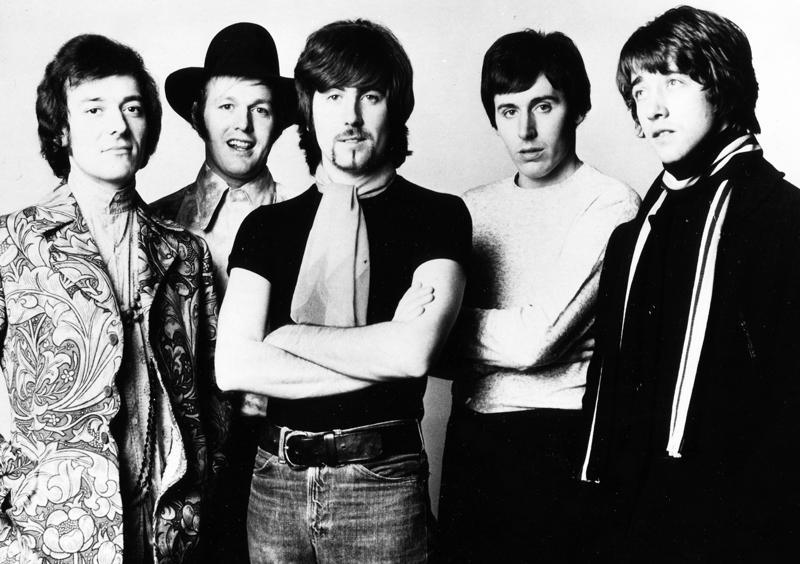
I don’t want to go through an in-depth history of the Hollies but lets hit some high points. The group was similar to the Byrds from several perspectives. First, vocal harmonies were a corner of the Hollies sound. Second, the initial successes of the Hollies were based on cover songs while eventually key members of the group (Allan Clarke, Tony Hicks, and Graham Nash) started to step forward and assume songwriting duties. By the Hollies’ fifth album in 1966 (For Certain Because(UK)/Stop!Stop!Stop!(US) and sixth album in 1967 (Evolution), all of the songs were written by members of the group. All was looking up for the Hollies in 1966 and 1967.
Let’s listen to the hit single released in the US for the Evolution album.
I hope you agree that the vocal harmonies on Carrie Anne, especially the high ones from Graham Nash, are brilliant. We will hear more about Graham, and how he became part of the Southern California Sound, in future posts in this on-going series. I should have the next series post up around mid-week.


 thebestmusicyouhaveneverheard